Renoir
L'équipe RENOIR (Recherche Energie NOIRe) est une équipe de recherche en cosmologie dont le but est de répondre aux grandes questions ouvertes de la cosmologie moderne. L’objectif principal est de comprendre le phénomène d’accélération récente de l’expansion de l’Univers. Cette accélération de l’expansion est souvent associée à une mystérieuse énergie noire qui représente 70 % du contenu de l’Univers. L’étude de l’énergie noire se fait par des mesures cosmologiques basées sur des sondes cosmologiques (supernovae Ia, galaxies et vides cosmiques).
L'équipe est impliquée dans plusieurs grands sondages cosmologiques :
- eBOSS/DESI où le CPPM développe des tests cosmologiques sur les vides cosmiques.
- Euclid, une mission spatiale de l’ESA, où l'équipe est responsable de la caractérisation des détecteurs infrarouges du spectro-photomètre NISP et développe un simulateur d’image de cet instrument utilisé pour préparer le traitement des données.
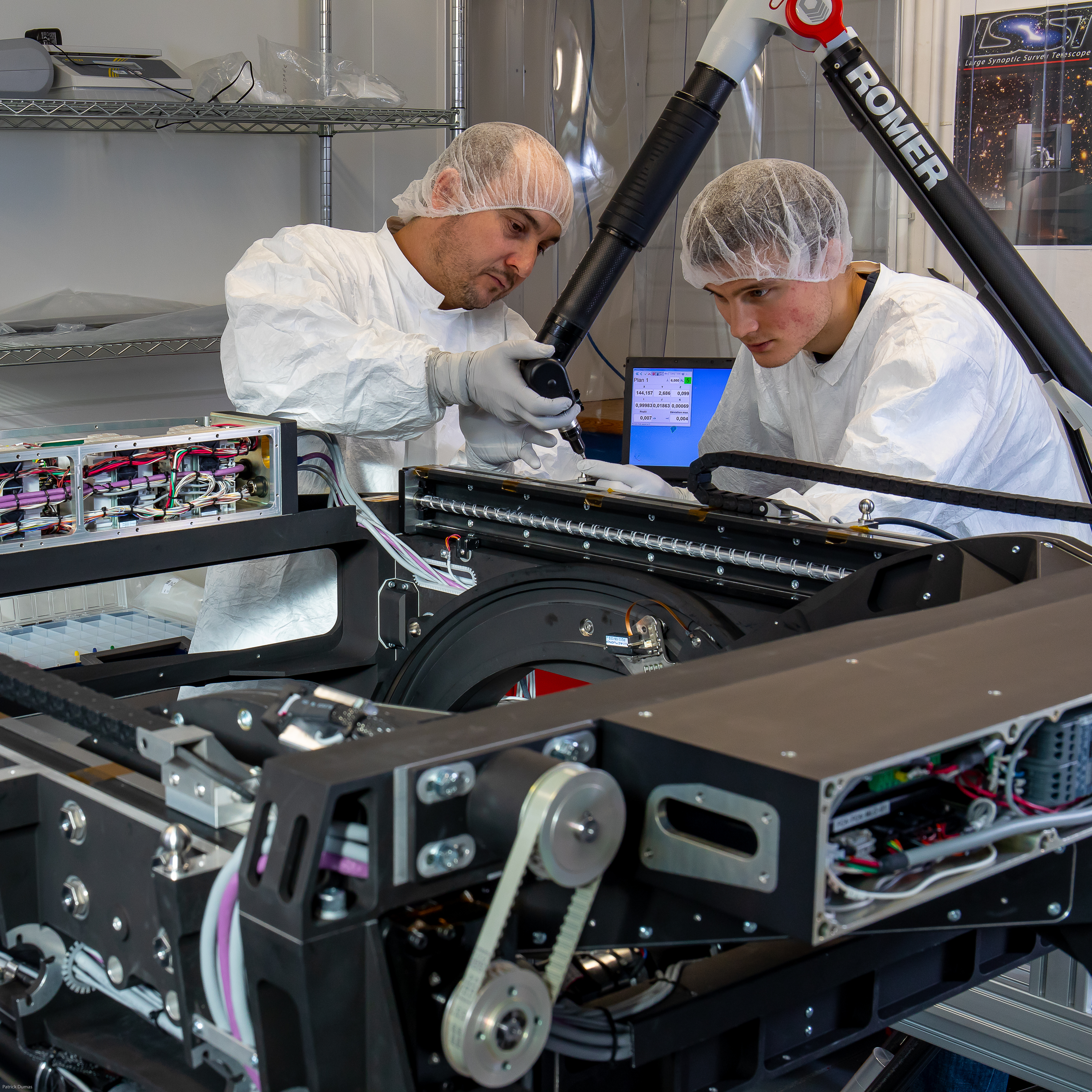
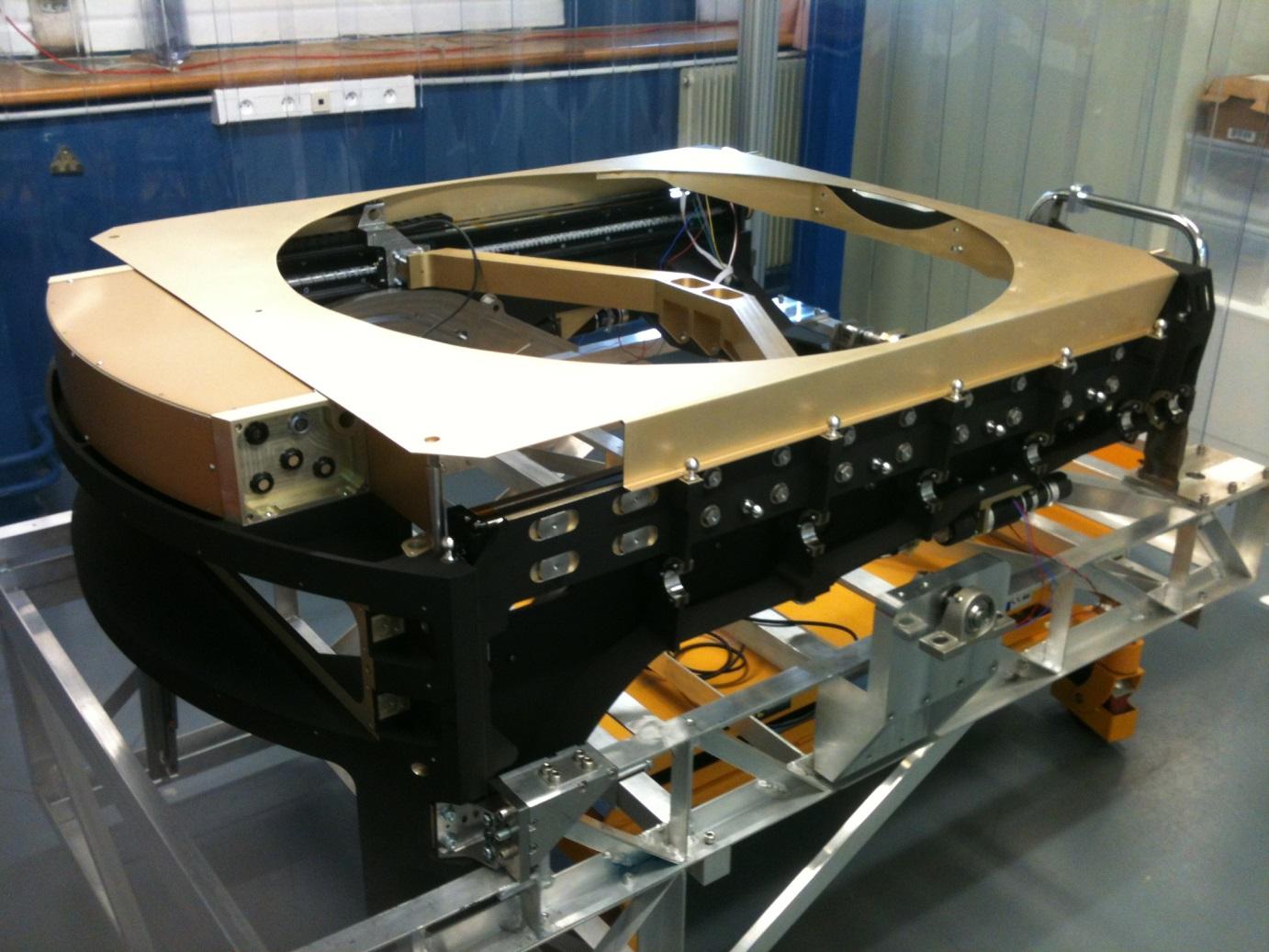
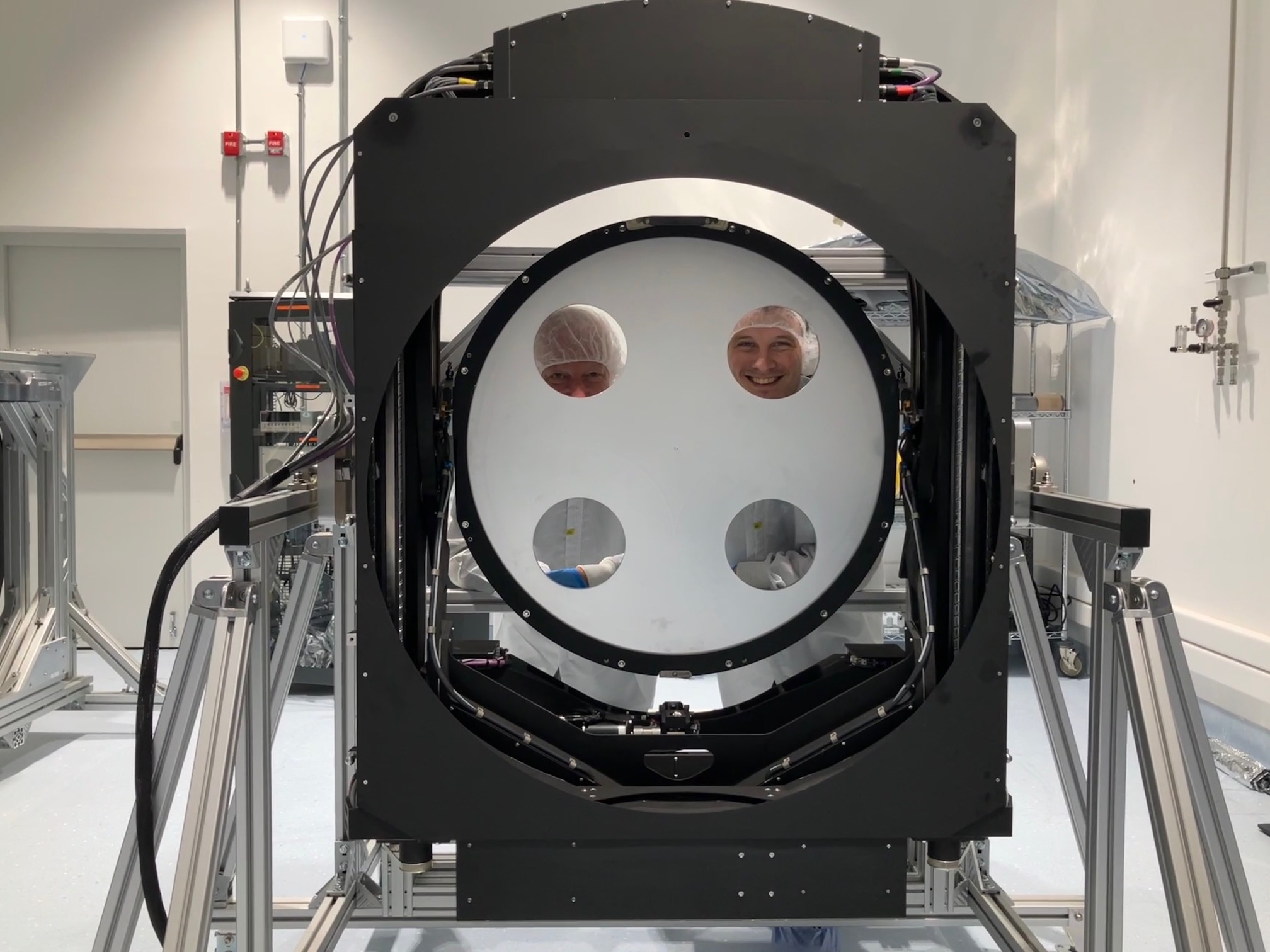
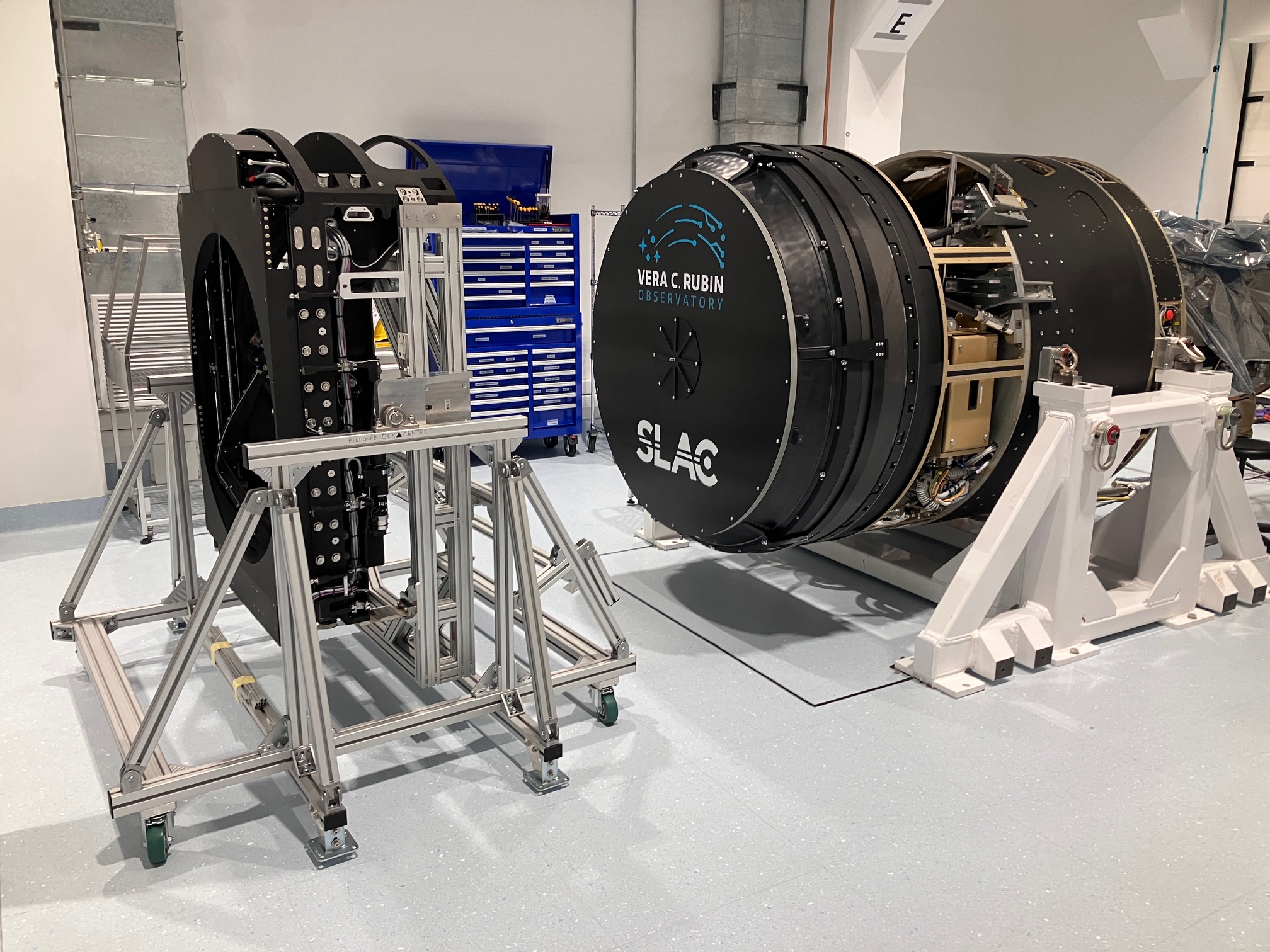
- LSST, un futur imageur où le CPPM est en charge de la construction de l'auto-changeur du système échangeur de filtres et travaille parallèlement à la préparation des analyses supernovæ et à la calibrations photométrique.
Plus d'informations disponibles ici
Chercheurs et enseignants-chercheurs
- Marie-Claude Cousinou, (eBOSS/DESI)
- Stéphanie Escoffier, (responsable scientifique Euclid, responsable scientifique eBoss/DESI)
- Fabrice Feinstein, (LSST)
- Dominique Fouchez, (responsable scientifique LSST)
- William Gillard, (responsable d'équipe, Euclid)
- Frédéric Henry-Couannier
- Eric Kajfasz, (responsable scientifique LISA)
- Alice Pisani
- Benjamin Racine, (LSST, responsable scientifique ZTF)
- Charling Tao, (eBOSS, Euclid)
Chaire d'excellence
- Julian Bautista, (2021-) (Euclid, LSST, DESI, ZTF)
Ingénieurs et techniciens
- Kévin Arnaud, service électronique (Euclid)
- Laurence Caillat, (Euclid, responsable PA/QA)
- Nicolas Fourmanoit, service Détecteurs et Données (Euclid)
- Pierre Karst, service mécanique (LSST)
- Smaïn Kermiche, service Détecteurs et Données (responsable technique SGS Euclid)
- Philippe Logier, service mécanique (Euclid)
- Aurélien Marini, service mécanique (LSST)
- Mathieu Niclas, service mécanique (Euclid, responsable AIV NI-DS)
- Jérôme Royon, service électronique (Euclid)
- Aurélia Secroun, service Détecteurs et Données (Euclid, responsable technique DESI)
- Julien Zoubian, service Détecteurs et Données (Euclid)
Post-doctorants et CDD
- Pauline Vielzeuf, (2021-2024) (DESI, Euclid)
- Bruno Sanchez, (2023-2027)
- Marie Tourneur-Silvain, (2023-2026), service Détecteurs et Données
- Aurélien Valade, (2023-2026)
- Fei Qin, (2024-2026)
- Nico Schuster, (2024-2027)
- Corentin Hanser, (2024-2027)
- Giulia Degni, (2025-2027)
- Juan Mena Fernandez, (2025-2027)
- Dylan Kuhn, (2025-2026)
- Petronin Lucile, (2026-2027)
Doctorants
- Damiano Rosselli, (2022-2026)
- Sarah Ferraiuolo, (2023-2026)
- Pierre Boccard, (2024-2027)
- Katayoon Ghaemiardakani, (2024-2027)
- Soorya Narayan Rajeshkumar, (2024-2027)
- Urwa Shoaib, (2026-2029)
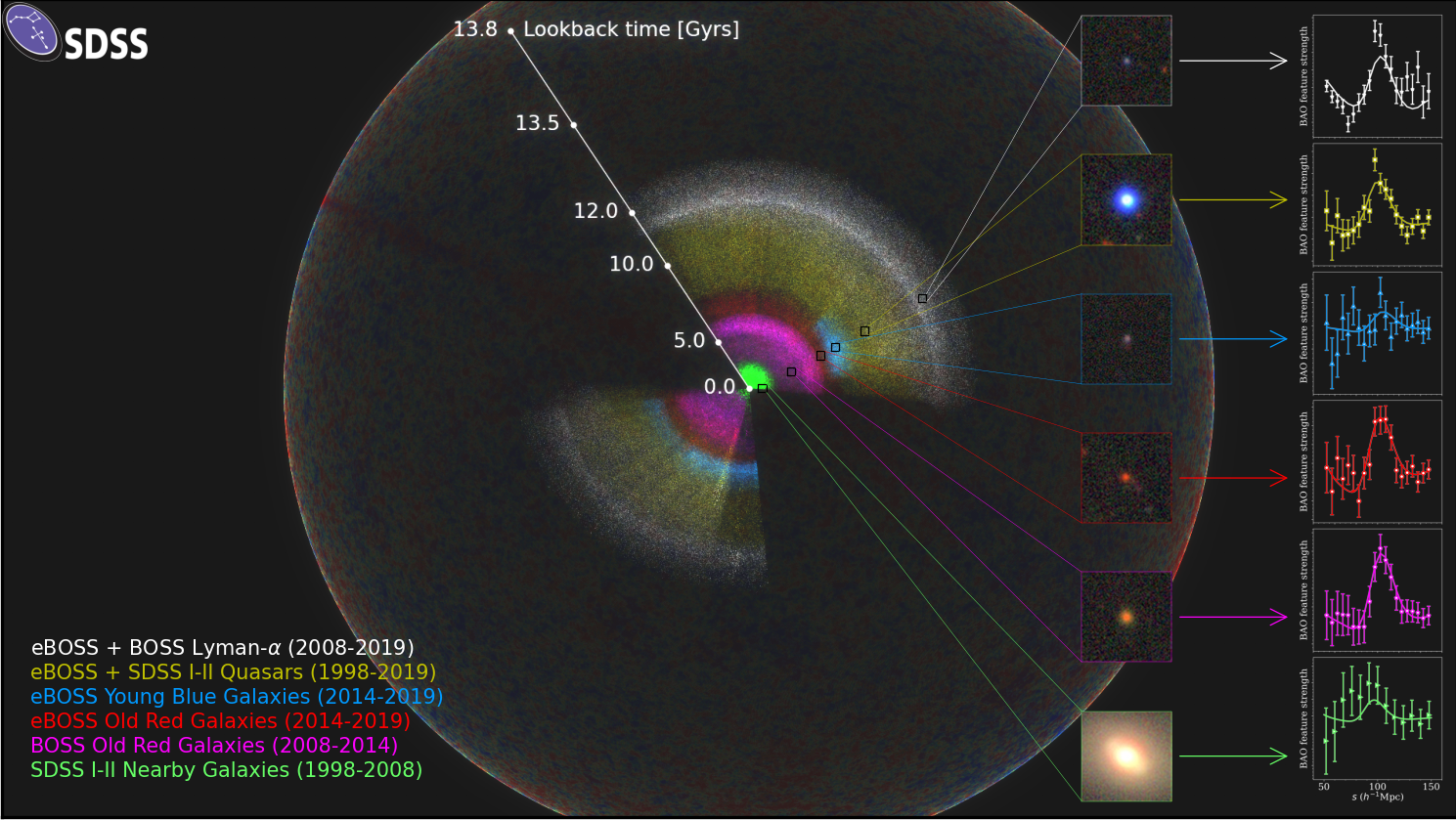
Pour déterminer le contenu énergétique de l’Univers et mesurer son histoire cosmique, une méthode observationnelle est d’utiliser les Oscillations Acoustiques Baryoniques (BAO) comme échelle standard dans la distribution spatiale des galaxies.
Le CPPM est impliqué depuis 2010 sur les grands relevés de galaxies, dont BOSS (Baryon Oscillation Spectroscopic Survey, 2010-2014) et eBOSS (2014-2019) des programmes SDSS-III et SDSS-IV respectivement. Le sondage BOSS a permis de cartographier, grâce au télescope de 2.5 mètres de diamètre de la fondation Sloan situé à l’Observatoire Apache Point au Nouveau Mexique (Etats-Unis), la distribution tridimensionnelle de 1.5 millions de galaxies rouges lumineuses (LRG) situées entre 0.2 < z < 0.8 sur un champ de vue de 10 000 deg2. Le sondage eBOSS couvrira quant à lui tout le domaine en redshift intermédiaire, c’est-à-dire 0.6 < z < 3.5, sur une surface d’environ 3500 deg2.
Dans ce cadre, nous menons des analyses sur le test d’Alcock-Paczynski et sur les vides cosmiques.
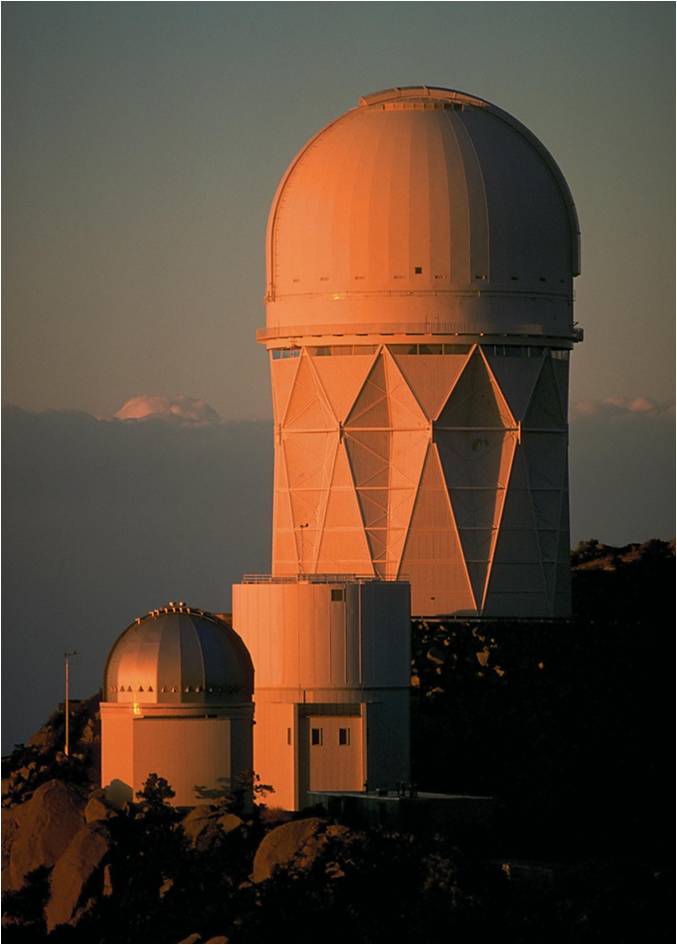
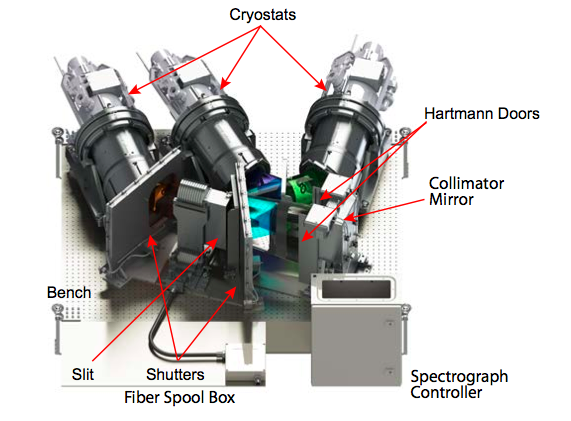
D’autre part, nous avons participé au projet DESI (Dark Energy Spectroscopic Instrument) qui a vu ses premières lumières en 2019. L’instrument DESI est un spectrographe multi-objets novateur (10 spectrographes de 3 voies spectrales chacun), alimenté par 5000 fibres optiques pouvant ainsi réaliser en parallèle 5000 spectres de galaxies. Les instruments seront installés sur le télescope Mayall de 4 mètres de diamètre situé en Arizona (États-Unis). Au CPPM nous participons à la caractérisation des dix spectrographes produits par la société Winlight basée à Pertuis (84).
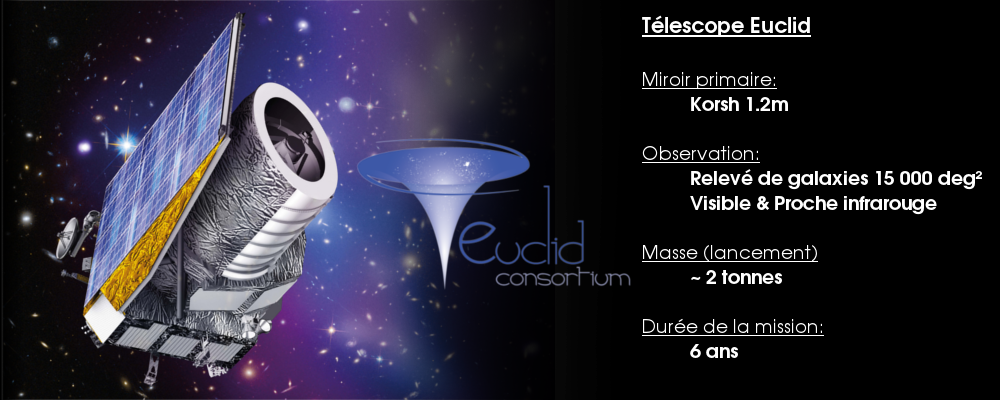
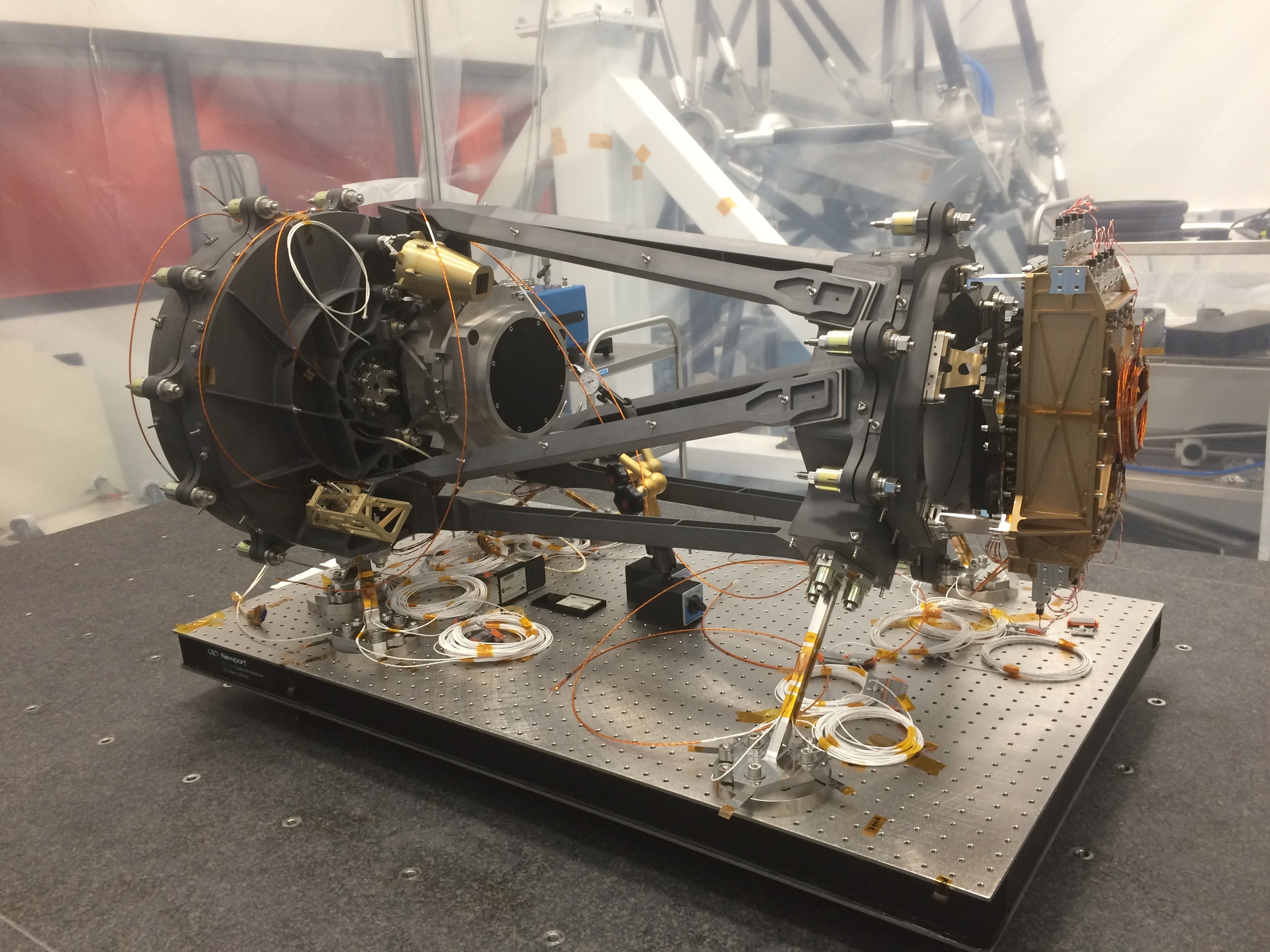
Euclid est une mission spatiale dédiée à l'étude de l'accélération de l'Univers qui a été lancée le 1er juillet 2023 pour une durée de 6 ans. Euclid étudiera les larges structures de l'Univers sur plus de 15 000 degrés carrés jusqu'à un temps cosmique de 10 milliards d'années soit à plus de 75 % de l'âge de l'Univers. La mission est optimisée pour deux sondes cosmologiques, le cisaillement gravitationnel faible et la mesure des oscillations acoustiques baryoniques mais pourra aussi adresser de nombreux autres tests cosmologiques comme les mesures d'amas.
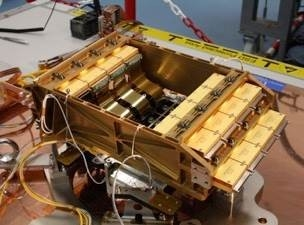
Le CPPM, par l'intermédiaire de l’équipe Renoir, a été impliqué dans la préparation de la mission Euclid. L'équipe a été impliquée dans la caractérisation et l’intégration des détecteurs infrarouges du spectrophotomètre NISP, un des deux instruments d’Euclid. Les détecteurs H2RG, livrés par la NASA, ont été caractérisés au CPPM et sont intégrés sur le plan focal de l'instrument NISP. Le CPPM a aussi été en charge de la calibration de l’instrument avant sa livraison à l'ESA (mai 2020).
La deuxième implication majeure de l’équipe du CPPM concerne le segment sol d’Euclid (SGS). Le segment sol est chargé du traitement des données et est distribué dans les pays européens majeurs participants au projet. Il est organisé autour d’unités opérationnelles (OU), en charge de définir les algorithmes de traitement, et autour de Centres de données (SDC), en charge d’implémenter les pipelines et de produire les catalogues. Le CPPM est responsable du développement du simulateur TIPS (images spectroscopie de l'instrument NISP), ainsi que son intégration dans le pipeline du consortium. Le CPPM participe aussi aux productions des simulations au SDC Français, le CC-IN2P3.
Au niveau science, nous participons aux activités du Galaxy Clustering Science Working Group (GC-SWG), avons la responsabilité du Work-Package (WP) « Nouvelles Sondes », ainsi que celle du SWG sur les transients/SNe. Nous sommes particulièrement impliqués sur les analyses de galaxy clustering, les vides cosmiques, l’échelle d’homogénéité et la combinaison de sondes.
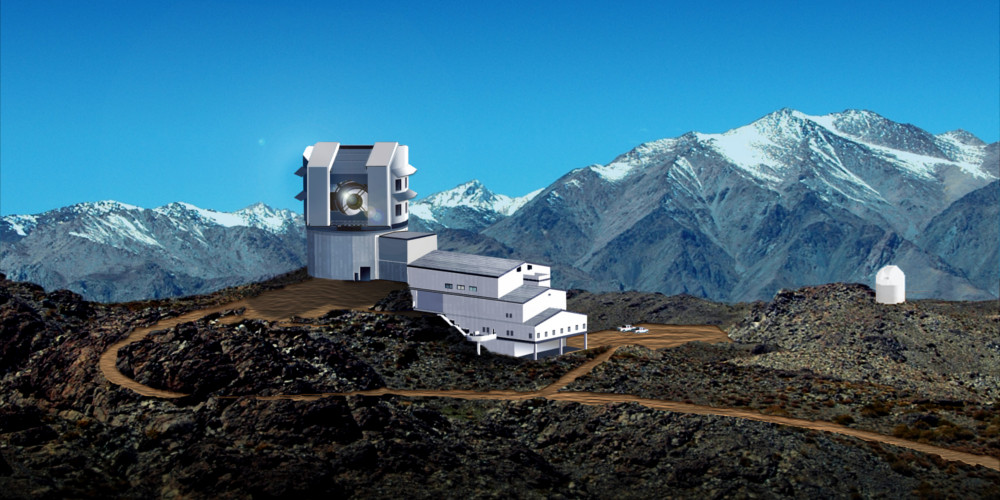
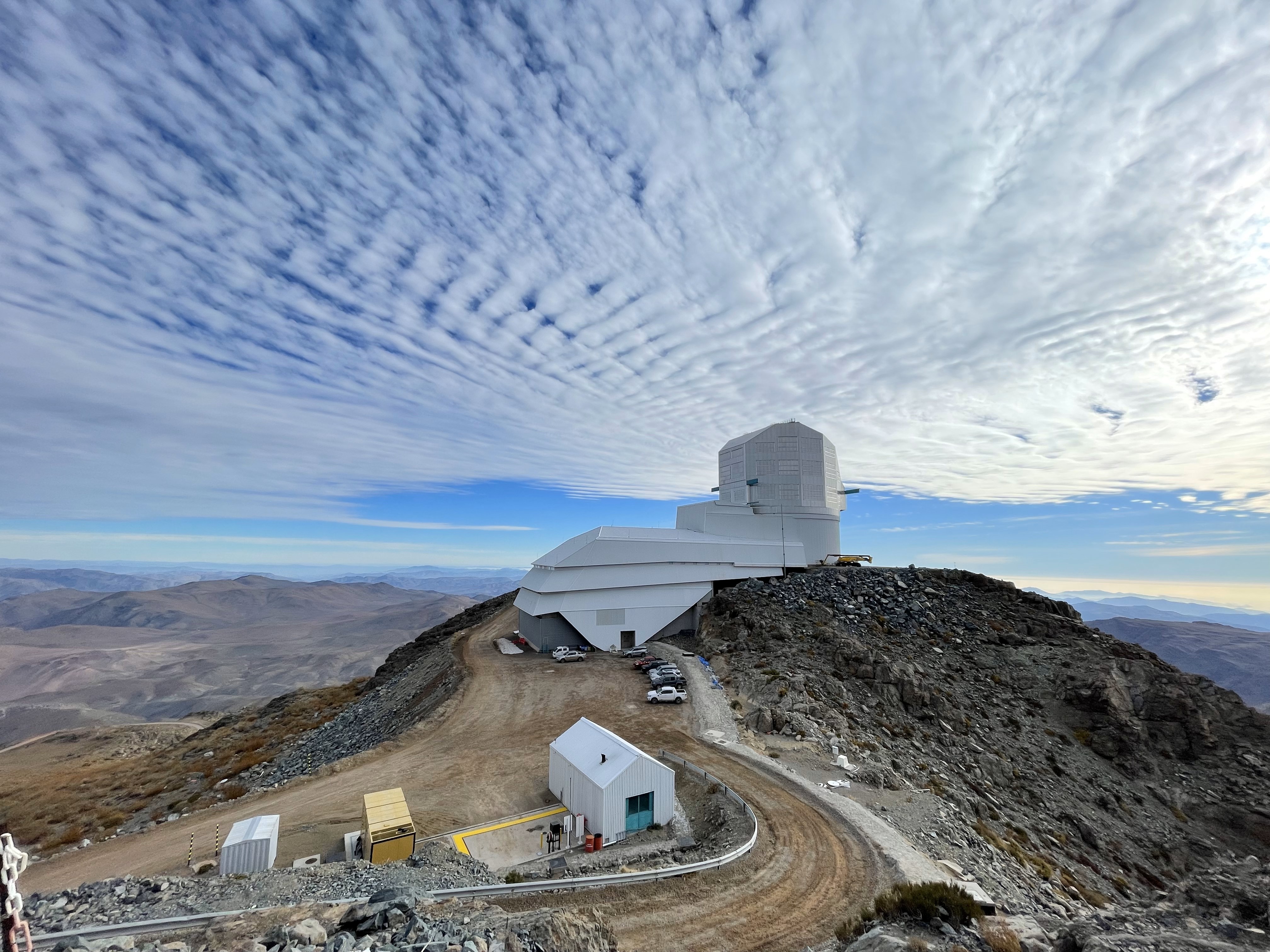
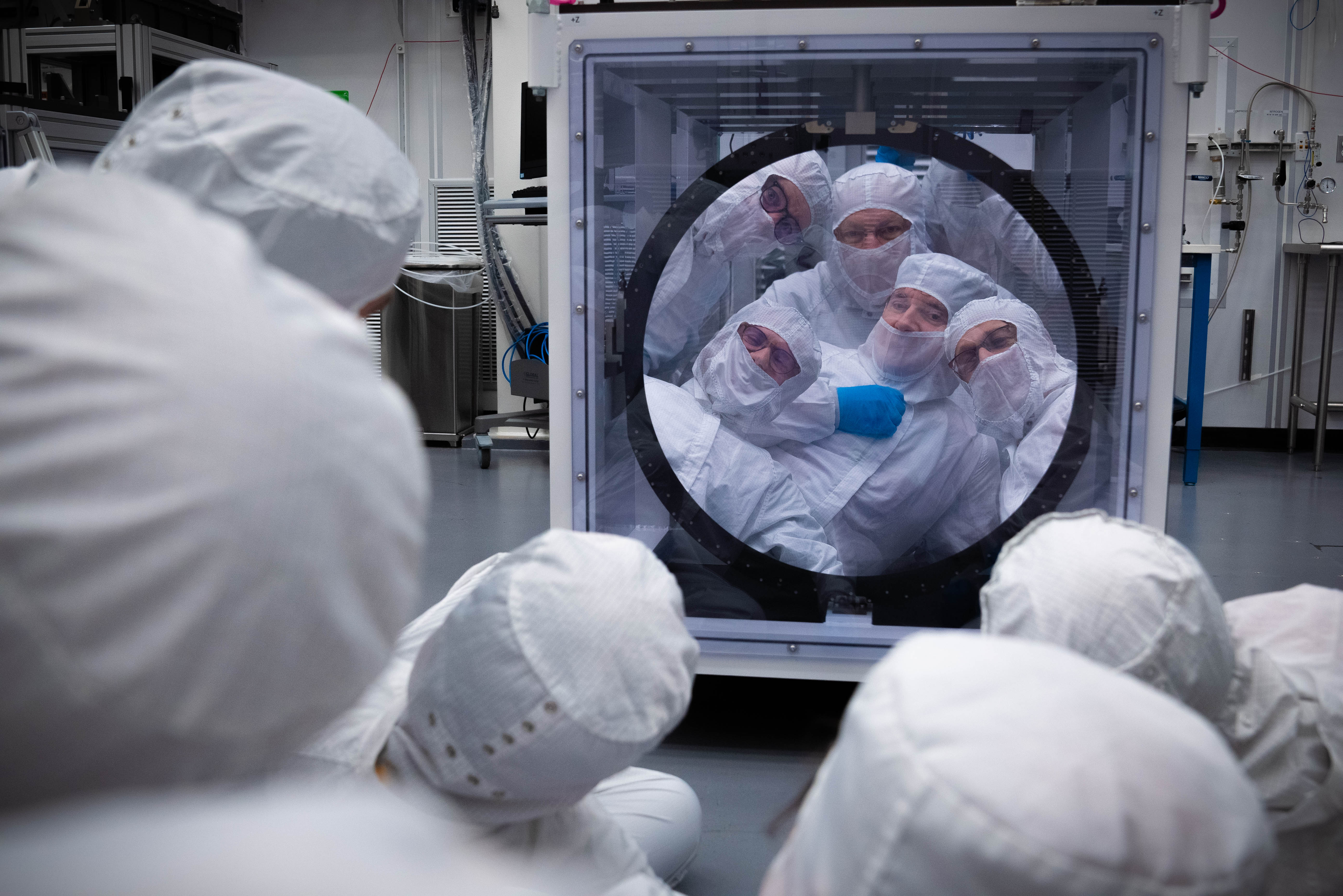
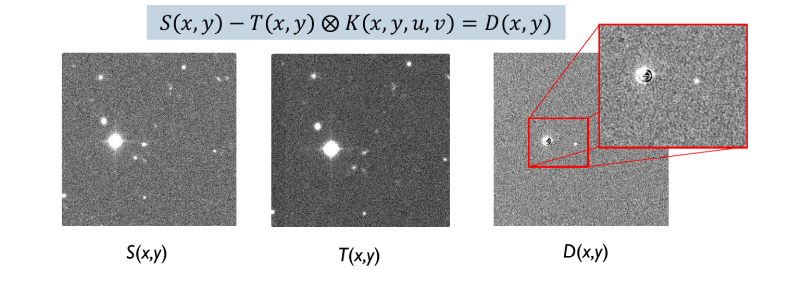
LSST est un projet de télescope de 8 mètres au sol qui doit couvrir tout le ciel (20,000 deg²) en plusieurs bandes photométriques sélectionnées grâce à des filtres de couleur. Il sera construit non loin des télescopes Gémini South (8.2 m) et SOAR (4.3 m), sur le site de Cerro Pachón. Il devrait fournir ses premières images à l’été 2025. Durant les 10 années de sa phase d'exploitation (2025-2035), LSST va produire une quantité de données au moins 10 fois plus importante que l’existant. Avec une pose toutes les 15 secondes, on attend environ 20 à 30 Téraoctets par nuit soit un total d’environ 30 Pétaoctets de données. Chaque pose couvre 10 deg². Les données seront réduites dans deux grands centres de calcul miroirs : le ‘National Center for Supercomputing Applications’ (NCSA) dans l’Illinois et le Centre de Calcul de l’IN2P3. Le CPPM a été responsable de la coordination de la construction du système changeur de filtres de LSST pour le prototype et le modèle final ainsi que responsable de la construction d'un de ses sous-systèmes : l'auto-changeur. En effet, le système d'échange de filtres de la caméra est composé de trois systèmes automatisés : un carrousel de 5 filtres optiques, d'un changeur de filtres (l’Auto Changer) qui peut, à tout moment, venir remplacer l'un des 5 filtres en place. Le sixième filtre pourra être inter-changé dans la caméra durant la journée avec un mécanisme chargeur de filtres (le Loader). Le système est validé par un banc de test permettant de simuler la configuration réelle de la caméra. L'équipe scientifique travaille à la préparation des analyses supernovæ et à la calibration photométrique. Nous sommes ainsi fortement impliqués dans l’utilisation du software de réduction des données où nous travaillons à améliorer les algorithmes et les procédures pour la découverte et la mesure photométrique des supernovæ. Nous utilisons l’expertise acquise dans ce domaine il y a plus de dix ans avec la collaboration SNLS et plus récemment avec la participation au programme de cosmologie avec les supernovae du Zwicky Transient Facility (ZTF) pour l'analyse des supernovae proches.
La mesure du diagramme de Hubble des supernovae est limitée, déjà avec la statistique actuelle, par les erreurs systématiques. En particulier la calibration photométrique sera un point clé. Nous avons donc démarré une activité sur la calibration photométrique. Nous nous concentrons sur l’utilisation des observations externes du catalogue Gaia. Nous avons aussi une participation expérimentale à la mise en place d’observation du projet de calibration par diode DICE.
Articles
2026 : 94 articles
- Euclid: Constraints on f(R) cosmologies from the spectroscopic and photometric primary probes, S. Casas et al., Euclid Collaboration, Astron. Astrophys. 707 (2026) A176
- Euclid: Field-level inference of primordial non-Gaussianity and cosmic initial conditions, A. Andrews et al., Euclid Collaboration, Astron. Astrophys. 711 (2026) A94
- Euclid: Optimising tomographic redshift binning for 3$$2pt power spectrum constraints on dark energy, J. H. W. Wong et al., Euclid Collaboration, Astron. Astrophys. 708 (2026) A284
- Euclid: Galaxy morphology and photometry from bulge-disc decomposition of Early Release Observations, L. Quilley et al., Euclid Collaboration, Astron. Astrophys. 710 (2026) A277
- Euclid: Quick Data Release (Q1) – Photometric studies of known transients, C. Duffy et al., Euclid Collaboration, Astron. Astrophys. 711 (2026) A38
- Data Release 1 of the Dark Energy Spectroscopic Instrument, Karim, M. Abdul et al., DESI Collaboration, Astron. J. 171 (2026) 285
- Euclid Quick Data Release (Q1) - XV. A probabilistic classification of quenched galaxies, P. Corcho-Caballero et al., Euclid Collaboration, Astron. Astrophys. 711 (2026) A15
- Euclid Quick Data Release (Q1) - V. Photometric redshifts and physical properties of galaxies through the PHZ processing function, M. Tucci et al., Euclid Collaboration, Astron. Astrophys. 711 (2026) A5
- Euclid Quick Data Release (Q1): From spectrograms to spectra: the SIR spectroscopic Processing Function, Y. Copin et al., Euclid Collaboration, Astron. Astrophys. 711 (2026) A6
- Euclid Quick Data Release (Q1) - XIII. Exploring galaxy properties with a multi-modal foundation model, M. Siudek et al., Euclid Collaboration, Astron. Astrophys. 711 (2026) A13
- Euclid Quick Data Release (Q1). XXIV. Extending the quest for little red dots to z < 4, L. Bisigello et al., Euclid Collaboration, Astron. Astrophys. 711 (2026) A24
- Euclid Quick Data Release (Q1) - XXXI. LEMON – LEns MOdelling with Neural networks. Automated and fast modelling of Euclid gravitational lenses with singular isothermal ellipsoid mass profile, V. Busillo et al., Euclid Collaboration, Astron. Astrophys. 711 (2026) A31
- Euclid Quick Data Release (Q1) - III. NIR processing and data products, G. Polenta et al., Euclid Collaboration, Astron. Astrophys. 711 (2026) A3
- Euclid Quick Data Release (Q1) - X. A census of dwarf galaxies across a range of distances and environments, F. R. Marleau et al., Euclid Collaboration, Astron. Astrophys. 711 (2026) A10
- Euclid Quick Data Release (Q1) - XXXIV. First detections from the Euclid galaxy cluster workflow, S. Bhargava et al., Euclid Collaboration, Astron. Astrophys. 711 (2026) A34
- Euclid preparation - LXXXVI. Cosmic Dawn Survey: evolution of the galaxy stellar mass function across 0.2<z<6.5 measured over 10 square degrees, L. Zalesky et al., Euclid Collaboration, Astron. Astrophys. 708 (2026) A104
- Euclid preparation: LXXXIII. The impact of redshift interlopers on the two-point correlation function analysis, I. Risso et al., Euclid Collaboration, Astron. Astrophys. 707 (2026) A233
- Euclid preparation: LXXVII. The NISP spectroscopy channel: Ground performance and calibration, W. Gillard et al., Euclid Collaboration, Astron. Astrophys. 707 (2026) A227
- Euclid preparation. LXXXIX. Accurate and precise data-driven angular power spectrum covariances, K. Naidoo et al., Euclid Collaboration, Astron. Astrophys. 708 (2026) A167
- Euclid: An emulator for baryonic effects on the matter bispectrum, P. A. Burger et al., Euclid Collaboration, Astron. Astrophys. 705 (2026) A170
- Euclid preparation: LXXVIII. Full-shape modelling of two-point and three-point correlation functions in real space, M. Guidi et al., Euclid Collaboration, Astron. Astrophys. 707 (2026) A228
- Euclid preparation. Full-shape modelling of 2-point and 3-point correlation functions in real space, M. Guidi et al., Euclid Collaboration, Astron. Astrophys. 707 (2026) A228
- Euclid: Early Release Observations. Weak gravitational lensing analysis of Abell 2390, T. Schrabback et al., Euclid Collaboration, Astron. Astrophys. 708 (2026) A345
- Euclid: Early Release Observations. A combined strong and weak lensing solution for Abell 2390 beyond its virial radius, J. M. Diego et al., Euclid Collaboration, Astron. Astrophys. 706 (2026) A83
- Euclid preparation: LXXX. Overview of Euclid infrared detector performance from ground tests, B. Kubik et al., Euclid Collaboration, Astron. Astrophys. 707 (2026) A230
- Euclid VI. NISP-P optical ghosts, K. Paterson et al., Euclid Collaboration, Astron. Astrophys. 707 (2026) A226
- Euclid: Photometric redshift calibration with self-organising maps, W. Roster et al., Euclid Collaboration, Astron. Astrophys. 707 (2026) A277
- Euclid Quick Data Release (Q1) - XXI. Active galactic nuclei identification using diffusion-based inpainting of Euclid VIS images, G. Stevens et al., Euclid Collaboration, Astron. Astrophys. 711 (2026) A21
- GWTC-4.0: Methods for Identifying and Characterizing Gravitational-wave Transients, Abac, A.G. et al., indéfini, Astrophys. J. Lett 1004 (2026) L21
- GWTC-4.0: Population Properties of Merging Compact Binaries, A. G. Abac et al., indéfini, Astrophys. J. Lett 1005 (2026) L51
- GWTC-4.0: Updating the Gravitational-Wave Transient Catalog with Observations from the First Part of the Fourth LIGO-Virgo-KAGRA Observing Run, A. G. Abac et al., indéfini, Astrophys. J. Lett 1004 (2026) L22
- Open Data from LIGO, Virgo, and KAGRA through the First Part of the Fourth Observing Run, A. G. Abac et al., indéfini, Astrophys. J 1004 (2026) 232
- Upper Limits on the Isotropic Gravitational-Wave Background from the first part of LIGO, Virgo, and KAGRA’s fourth Observing Run, A. G. Abac et al., indéfini, Phys. Rev. D 114 (2026) 042001
- GWTC-4.0: Constraints on the Cosmic Expansion Rate and Modified Gravitational-wave Propagation, A. G. Abac et al., indéfini, Astrophys. J. Lett 1007 (2026) L17
- Why Cosmic Voids Matter: Pristine Evolution, N. Schuster et al., indéfini, J. Cosmol. Astropart. P 05 (2026) 018
- GW230814: Investigation of a Loud Gravitational-wave Signal Observed with a Single Detector, Abac, A.G. et al., indéfini, Astrophys. J. Lett 1004 (2026) L23
- Black Hole Spectroscopy and Tests of General Relativity with GW250114, A. G. Abac et al., indéfini, Phys. Rev. Lett 136 (2026) 041403
- Directed searches for gravitational waves from ultralight vector boson clouds around merger remnant and galactic black holes during the first part of the fourth LIGO-Virgo-KAGRA observing run, A. G. Abac et al., indéfini, Phys. Rev. D 114 (2026) 022006
- Euclid: Methodology for derivation of IPC-corrected conversion gain of nonlinear CMOS APS, J. Le Graet et al., Euclid Collaboration, Astron. Astrophys. 705 (2026) A138
- Extracting the Alcock-Paczynski signal from voids: A novel approach via reconstruction, G. Degni et al., indéfini, Astron. Astrophys. 706 (2026) A286
- Euclid Quick Data Release (Q1) - XVII. First Euclid statistical study of galaxy mergers and their connection to active galactic nuclei, A. La Marca et al., Euclid Collaboration, Astron. Astrophys. 711 (2026) A17
- Euclid preparation: LXXIX. Using mock low surface brightness dwarf galaxies to probe Euclid Wide Survey detection capabilities, M. Urbano et al., Euclid Collaboration, Astron. Astrophys. 707 (2026) A229
- Euclid preparation: LXXXII. Predicting star-forming galaxy scaling relations with the spectral stacking code SpectraPyle, S. Quai et al., Euclid Collaboration, Astron. Astrophys. 707 (2026) A232
- Euclid: Quick Data Release (Q1) – The connection between galaxy close encounters and radio activity, M. Magliocchetti et al., Euclid Collaboration, Astron. Astrophys. 711 (2026) A40
- Euclid: Discovery of bright z ≃ 7 Lyman-break galaxies in UltraVISTA and Euclid COSMOS, R. G. Varadaraj et al., Euclid Collaboration, Astron. Astrophys. 707 (2026) A239
- Euclid preparation: LXXXV. Toward a DR1 application of higher-order weak lensing statistics, S. Vinciguerra et al., Euclid Collaboration, Astron. Astrophys. 707 (2026) A235
- Photometric Redshift Estimation for Rubin Observatory Data Preview 1 with Redshift Assessment Infrastructure Layers (RAIL), T. Zhang et al., LSST Dark Energy Science Collaboration, Mon. Not. Roy. Astron. Soc 550 (2026) stag1012
- Detection of supernova magnitude fluctuations induced by large-scale structure, A. Nguyen et al., DESI Collaboration, The Open Journal of Astrophysics 9 (2026)
- Cosmology Likelihood for Observables in Euclid (CLOE). 1. Theoretical recipe, V. F. Cardone et al., Euclid Collaboration, Astron. Astrophys. 713 (2026) A186
- Euclid: Exploring observational systematics in cluster cosmology – a comprehensive analysis of cluster counts and clustering, A. Fumagalli et al., Euclid Collaboration, Astron. Astrophys. 709 (2026) A102
- Euclid preparation: LXXXIV. The flat-sky approximation for the clustering of Euclid’s photometric galaxies, W. L. Matthewson et al., Euclid Collaboration, Astron. Astrophys. (2026)
- Directional Search for Persistent Gravitational Waves: Results from the First Part of LIGO-Virgo-KAGRA’s Fourth Observing Run, A. G. Abac et al., indéfini, Phys. Rev. D 114 (2026) 2
- The Weighing Halos Accurately, Locally, and Efficiently with Supernovae (WHALES) Survey Overview and Initial Data Release, M. Acevedo et al., indéfini, Astrophys. J. Lett 998 (2026) L26
- Direct multi-model dark-matter search with gravitational-wave interferometers using data from the first part of the fourth LIGO-Virgo-KAGRA observing run, A. G. Abac et al., indéfini, Phys. Rev. Lett 137 (2026) 131001
- StarDICE IV: correcting visible photometry from atmospheric gray extinction using thermal infrared observations, K. Sommer et al., indéfini, RASTI 5 (2026) rzag011
- Euclid: Quick Data Release (Q1) – Secondary nuclei in early-type galaxies, M. Fabricius et al., Euclid Collaboration, Astron. Astrophys. 711 (2026) A39
- Euclid preparation: LXXXVII. Non-Gaussianity of 2-point statistics likelihood: Precise analysis of the matter power spectrum distribution, J. Bel et al., Euclid Collaboration, Astron. Astrophys. 708 (2026) A105
- Validation of optical pathlength stability in a LISA test-bench demonstrator, S. Harer et al., indéfini, Classical Quant. Grav 43 (2026) 075001
- Search for planetary-mass ultra-compact binaries using data from the first part of the LIGO–Virgo–KAGRA fourth observing run, A. G. Abac et al., indéfini, Phys. Rev. D 114 (2026) 022005
- Euclid preparation: LXXXI. The impact of nonparametric star formation histories on spatially resolved galaxy property estimation using synthetic Euclid images, A. Nersesian et al., Euclid Collaboration, Astron. Astrophys. 707 (2026) A231
- Euclid - VII. Structural-Thermal-Optical Performance, A. Anselmi et al., Euclid Collaboration, Astron. Astrophys. 709 (2026) A15
- The DESI DR1 peculiar velocity survey: Growth rate measurements from the galaxy power spectrum, F. Qin et al., indéfini, Astron. Astrophys. 708 (2026) A219
- The DESI DR1 Peculiar Velocity Survey: growth rate measurements from galaxy and momentum correlation functions, R. J. Turner et al., indéfini, The Open Journal of Astrophysics 9 (2026) 164736
- The DESI DR1 Peculiar Velocity Survey: growth rate measurements from the maximum likelihood fields method, Y. Lai et al., indéfini, J. Cosmol. Astropart. P 04 (2026) 026
- Updates on dipolar anisotropy in local measurements of the Hubble constant from Cosmicflows-4, V. Salzano et al., indéfini, Phys. Dark Univ. 53 (2026) 102382
- The DESI DR1 Peculiar Velocity Survey: global zero-point and constraints, A. Carr et al., indéfini, Astrophys. J 1004 (2026) 235
- Euclid: The first statistical census of dusty and massive objects in the ERO/Perseus field, G. Girardi et al., Euclid Collaboration, Astron. Astrophys. 706 (2026) A371
- Growth rate measurements from a joint analysis of the large-scale galaxy clustering in Fourier and configuration space, V. Aronica et al., indéfini, Astron. Astrophys. 706 (2026) A380
- Euclid Quick Data Release (Q1): Euclid spectroscopy of QSOs. 1. Identification and redshift determination of 3500 bright QSOs, Y. Fu et al., Euclid Collaboration, Astron. Astrophys. (2026)
- Overdense fireworks in GOODS-N: Unveiling a record number of massive dusty star forming galaxies at z$$5.2 with the N2CLS, G. Lagache et al., indéfini, Astron. Astrophys. 705 (2026) A214
- An effective $\boldsymbolΛ$-Szekeres modelling of the local Universe with Cosmicflows-4, M. Galoppo et al., indéfini, J. Cosmol. Astropart. P 06 (2026) 096
- Constraints on gravitational waves from the 2024 Vela pulsar glitch, A. G. Abac et al., indéfini, Astrophys. J 1005 (2026) 12
- Euclid: Improving redshift distribution reconstruction using a deep-to-wide transfer function, Y. Kang et al., Euclid Collaboration, Astron. Astrophys. 709 (2026) A55
- Deep Search for Joint Sources of Gravitational Waves and High-Energy Neutrinos with IceCube During the Third Observing Run of LIGO and Virgo, R. Abbasi et al., indéfini, Astrophys. J 1003 (2026) 41
- Euclid preparation - LXXXVIII. 3D reconstruction of the cosmic web with Euclid Deep spectroscopic samples, K. Kraljic et al., Euclid Collaboration, Astron. Astrophys. 708 (2026) A164
- Dark Energy Survey: DESI-Independent Angular BAO Measurement, J. Mena-Fernández et al., DES Collaboration, Phys. Rev. D 113 (2026) 123521
- GW240925 and GW250207: Astrophysical Calibration of Gravitational-wave Detectors, A. G. Abac et al., indéfini, Phys. Rev. Lett 137 (2026) 071401
- Nouvelle ère d’observation en cosmologie avec les relevés DESI et Euclid, N. Palanque-Delabrouille et al., indéfini, Reflets phys. 83 (2026) 11-15
- The NIKA2 cosmological legacy survey at 2 mm: Catalogs, colors, redshift distributions, and implications for deep surveys, M. Béthermin et al., indéfini, Astron. Astrophys. 708 (2026) A295
- Euclid: Early Release Observations – The star-formation history of massive early-type galaxies in the Perseus cluster, S. Martocchia et al., Euclid Collaboration, Astron. Astrophys. 708 (2026) A63
- Euclid: Early Release Observations – The star cluster systems of the Local Group dwarf galaxies IC 10 and NGC 6822, J. M. Howell et al., Euclid Collaboration, Astron. Astrophys. 706 (2026) A185
- NIKA2 unveils and pinpoints the Planck compact sources, S. Berta et al., indéfini, Astron. Astrophys. 708 (2026) L12
- NSF-DOE Vera C. Rubin Observatory Observations of Interstellar Comet 3I/ATLAS (C/2025 N1), C. O. Chandler et al., indéfini, indéfini 1001 (2026) L35
- Euclid: A blue galaxy population and a brightest cluster galaxy in the making in a MaDCoWS2 galaxy cluster candidate, A. Trudeau et al., Euclid Collaboration, Astron. Astrophys. 709 (2026) A198
- GASTON-GP: source catalogue and millimetre variability of massive protostellar objects, J.-X. Zhou et al., indéfini, Mon. Not. Roy. Astron. Soc 548 (2026) stag459
- Searches for Continuous Gravitational Waves from Supernova Remnants in the first part of the LIGO-Virgo-KAGRA Fourth Observing run, A. G. Abac et al., indéfini, Astrophys. J 1004 (2026) 204
- Narrowband searches for continuous gravitational waves from known pulsars in the first two parts of the fourth LIGO–Virgo–KAGRA observing run, A. G. Abac et al., indéfini, Astrophys. J 1005 (2026) 221
- Euclid. Populating a dark universe with galaxies using SciPIC, E. J. Gonzalez et al., Euclid Collaboration, Astron. Astrophys. (2026)
- Euclid: Asteroid rotation periods from the Euclid Ecliptic Survey, B. Y. Irureta-Goyena et al., Euclid Collaboration, Astron. Astrophys. 710 (2026) A27
- Euclid: Discovery of 31 new quasars at 6.6 < z < 7.8, D. Yang et al., Euclid Collaboration, Astron. Astrophys. 711 (2026) A104
- Euclid: Early Release Observations – Internal kinematics and the convective-transition gap of NGC 6397. High-precision multiple-pass photometry and astrometry, M. Griggio et al., Euclid Collaboration, Astron. Astrophys. (2026)
- Euclid: The convective-transition gap of 47 Tuc, M. Libralato et al., Euclid Collaboration, Astron. Astrophys. 712 (2026) A174
- Euclid: A UV-faint quasar in a highly luminous star-forming host galaxy at , S. Belladitta et al., Euclid Collaboration, Astron. Astrophys. 711 (2026) A150
- A Face-on View of Interstellar Dust in the Galactic Plane, Zhang, Lin et al., indéfini, Astron. J. 172 (2026) 177
2025 : 100 articles
- Characterization of contaminants in the Lyman-alpha forest auto-correlation with DESI, J. Guy et al., DESI Collaboration, J. Cosmol. Astropart. P 01 (2025)
- A Parameter-Masked Mock Data Challenge for Beyond-Two-Point Galaxy Clustering Statistics, E. Krause et al., Euclid Collaboration, Astrophys. J 990 (2025) 99
- Euclid preparation - LIV. Sensitivity to neutrino parameters, M. Archidiacono et al., Euclid Collaboration, Astron. Astrophys. 693 (2025) A58
- Validation of the DESI 2024 Lyman Alpha Forest BAL Masking Strategy, P. Martini et al., indéfini, J. Cosmol. Astropart. P 01 (2025)
- Euclid: Early Release Observations – A glance at free-floating new-born planets in the sigma Orionis cluster, E. L. Martín et al., Euclid Collaboration, Astron. Astrophys. 697 (2025) A7
- Euclid: Early Release Observations – A preview of the Euclid era through a galaxy cluster magnifying lens, H. Atek et al., Euclid Collaboration, Astron. Astrophys. 697 (2025) A15
- Euclid: Early Release Observations – Deep anatomy of nearby galaxies, L. K. Hunt et al., Euclid Collaboration, Astron. Astrophys. 697 (2025) A9
- Euclid: Early Release Observations – Dwarf galaxies in the Perseus galaxy cluster, F. R. Marleau et al., Euclid Collaboration, Astron. Astrophys. 697 (2025) A12
- Euclid: Early Release Observations – NISP-only sources and the search for luminous ???? = 6– 8 galaxies, J. R. Weaver et al., Euclid Collaboration, Astron. Astrophys. 697 (2025) A16
- Euclid: Early Release Observations – The intracluster light and intracluster globular clusters of the Perseus cluster, M. Kluge et al., Euclid Collaboration, Astron. Astrophys. 697 (2025) A13
- Euclid: Early Release Observations – Unveiling the morphology of two Milky Way globular clusters out to their periphery, D. Massari et al., Euclid Collaboration, Astron. Astrophys. 697 (2025) A8
- Euclid: Early Release Observations – Overview of the Perseus cluster and analysis of its luminosity and stellar mass functions, J.-C. Cuillandre et al., Euclid Collaboration, Astron. Astrophys. 697 (2025) A11
- Euclid: Early Release Observations – Globular clusters in the Fornax galaxy cluster, from dwarf galaxies to the intracluster field, T. Saifollahi et al., Euclid Collaboration, Astron. Astrophys. 697 (2025) A10
- Euclid. IV. The NISP Calibration Unit, F. Hormuth et al., Euclid Collaboration, Astron. Astrophys. 697 (2025) A4
- Euclid preparation. LVIII. Detecting globular clusters in the Euclid survey, K. Voggel et al., Euclid Collaboration, Astron. Astrophys. 693 (2025) A251
- Euclid. I. Overview of the Euclid mission, Y. Mellier et al., Euclid Collaboration, Astron. Astrophys. (2025)
- Euclid. III. The NISP Instrument, K. Jahnke et al., Euclid Collaboration, Astron. Astrophys. 697 (2025) A3
- Euclid. V. The Flagship galaxy mock catalogue: a comprehensive simulation for the Euclid mission, F. J. Castander et al., Euclid Collaboration, Astron. Astrophys. 697 (2025) A5
- Euclid: Early Release Observations – Programme overview and pipeline for compact- and diffuse-emission photometry, J.-C. Cuillandre et al., Euclid Collaboration, Astron. Astrophys. 697 (2025) A6
- Euclid preparation. LVII. Observational expectations for redshift z<7 active galactic nuclei in the Euclid Wide and Deep surveys, M. Selwood et al., Euclid Collaboration, Astron. Astrophys. 693 (2025) A250
- ZTF SN Ia DR2: Environmental dependencies of stretch and luminosity of a volume limited sample of 1,000 Type Ia Supernovae, M. Ginolin et al., ZTF Collaboration, Astron. Astrophys. 695 (2025) A140
- ZTF SN Ia DR2: Impact of the galaxy cluster environment on the stretch distribution of Type Ia supernovae, F. Ruppin et al., ZTF Collaboration, Astron. Astrophys. 694 (2025) A6
- ZTF SN Ia DR2: Colour standardisation of Type Ia Supernovae and its dependence on environment, M. Ginolin et al., ZTF Collaboration, Astron. Astrophys. 694 (2025) A4
- ZTF SN Ia DR2: Study of Type Ia Supernova lightcurve fits, M. Rigault et al., ZTF Collaboration, Astron. Astrophys. 694 (2025) A2
- ZTF SN Ia DR2: Evidence of Changing Dust Distributions With Redshift Using Type Ia Supernovae, B. Popovic et al., ZTF Collaboration, Astron. Astrophys. 694 (2025) A5
- ZTF SN Ia DR2: Exploring SN Ia properties in the vicinity of under-dense environments, M. Aubert et al., ZTF Collaboration, Astron. Astrophys. 694 (2025) A7
- Euclid preparation. LVI. Sensitivity to non-standard particle dark matter model, J. Lesgourgues et al., Euclid Collaboration, Astron. Astrophys. 693 (2025) A249
- ZTF SN Ia DR2: The secondary maximum in Type Ia supernovae, M. Deckers et al., ZTF Collaboration, Astron. Astrophys. 694 (2025) A12
- Euclid and KiDS-1000: Quantifying the impact of source-lens clustering on cosmic shear analyses, L. Linke et al., Euclid Collaboration, Astron. Astrophys. 693 (2025) A210
- Euclid preparation - LV. Exploring the properties of proto-clusters in the Simulated Euclid Wide Survey, H. Böhringer et al., Euclid Collaboration, Astron. Astrophys. 693 (2025) A59
- Euclid preparation. LXIV. The Cosmic Dawn Survey (DAWN) of the Euclid Deep and Auxiliary Fields, C. J. R. McPartland et al., Euclid Collaboration, Astron. Astrophys. 695 (2025) A259
- Euclid Preparation. Cosmic Dawn Survey: Data release 1 multiwavelength catalogues for Euclid Deep Field North and Euclid Deep Field Fornax, L. Zalesky et al., Euclid Collaboration, Astron. Astrophys. 695 (2025) A229
- Euclid: The Early Release Observations Lens Search Experiment, J. A. Acevedo Barroso et al., Euclid Collaboration, Astron. Astrophys. 697 (2025) A14
- Euclid preparation: LIX. Angular power spectra from discrete observations, N. Tessore et al., Euclid Collaboration, Astron. Astrophys. 694 (2025) A141
- Euclid preparation: Determining the weak lensing mass accuracy and precision for galaxy clusters, L. Ingoglia et al., Euclid Collaboration, Astron. Astrophys. 695 (2025) A280
- Euclid preparation. Simulations and nonlinearities beyond CDM. 1. Numerical methods and validation, J. Adamek et al., Euclid Collaboration, Astron. Astrophys. 695 (2025) A230
- Euclid preparation LXIII. Simulations and nonlinearities beyond CDM. 2. Results from non-standard simulations, G. Rácz et al., Euclid Collaboration, Astron. Astrophys. 695 (2025) A232
- ZTF SN Ia DR2: Overview, M. Rigault et al., ZTF Collaboration, Astron. Astrophys. 694 (2025) A1
- ZTF SN Ia DR2: Simulations and volume limited sample, M. Amenouche et al., ZTF Collaboration, Astron. Astrophys. 694 (2025) A3
- Euclid preparation. LXVII. Deep learning true galaxy morphologies for weak lensing shear bias calibration, B. Csizi et al., Euclid Collaboration, Astron. Astrophys. 695 (2025) A283
- Euclid preparation. LXIX. The impact of relativistic redshift-space distortions on two-point clustering statistics from the Euclid wide spectroscopic survey, M. Y. Elkhashab et al., Euclid Collaboration, Astron. Astrophys. 697 (2025) A85
- Euclid: Relativistic effects in the dipole of the 2-point correlation function, F. Lepori et al., Euclid Collaboration, Astron. Astrophys. 694 (2025) A321
- Cosmology with voids from the Nancy Grace Roman Space Telescope, G. Verza et al., indéfini, Astrophys. J 993 (2025) 227
- StarDICE III: Characterization of the photometric instrument with a Collimated Beam Projector, T. Souverin et al., indéfini, RASTI 4 (2025) rzaf010
- DESI 2024 VII: Cosmological Constraints from the Full-Shape Modeling of Clustering Measurements, A. G. Adame et al., DESI Collaboration, J. Cosmol. Astropart. P 07 (2025) 028
- DESI 2024 II: Sample Definitions, Characteristics, and Two-point Clustering Statistics, A. G. Adame et al., DESI Collaboration, J. Cosmol. Astropart. P 07 (2025) 017
- DESI 2024 V: Full-Shape Galaxy Clustering from Galaxies and Quasars, A. G. Adame et al., DESI Collaboration, J. Cosmol. Astropart. P 09 (2025) 008
- Euclid: Searches for strong gravitational lenses using convolutional neural nets in Early Release Observations of the Perseus field, R. Pearce-Casey et al., Euclid Collaboration, Astron. Astrophys. 696 (2025) A214
- Euclid preparation: LXVI. The impact of line-of-sight projections on the covariance between galaxy cluster multi-wavelength observable properties – insights from hydrodynamic simulations, A. Ragagnin et al., Euclid Collaboration, Astron. Astrophys. 695 (2025) A282
- The imprint of cosmic voids from the DESI Legacy Survey DR9 LRGs in the Planck 2018 lensing map through spectroscopically calibrated mocks, S. Sartori et al., DESI Collaboration, Astron. Astrophys. 700 (2025) A17
- Euclid: Early Release Observations of diffuse stellar structures and globular clusters as probes of the mass assembly of galaxies in the Dorado group, M. Urbano et al., Euclid Collaboration, Astron. Astrophys. 700 (2025) A104
- Euclid: Detecting Solar System objects in Euclid images and classifying them using Kohonen self-organising maps, A. A. Nucita et al., indéfini, Astron. Astrophys. 694 (2025) A116
- Cosmological inference including massive neutrinos from the matter power spectrum: biases induced by uncertainties in the covariance matrix, S. Gouyou Beauchamps et al., indéfini, Astron. Astrophys. 693 (2025) A226
- Comparing the DES-SN5YR and Pantheon+ SN cosmology analyses: Investigation based on “Evolving Dark Energy or Supernovae systematics?”, M. Vincenzi et al., DES Collaboration, Mon. Not. Roy. Astron. Soc 541 (2025) 2585-2593
- Euclid preparation: LX. The use of HST images as input for weak-lensing image simulations, D. Scognamiglio et al., Euclid Collaboration, Astron. Astrophys. 694 (2025) A262
- Euclid preparation: LXVIII. Extracting physical parameters from galaxies with machine learning, I. Kovačić et al., Euclid Collaboration, Astron. Astrophys. (2025)
- Euclid preparation. . LXXII. 3-dimensional galaxy clustering in configuration space. Part I. 2-point correlation function estimation, S. de la Torre et al., Euclid Collaboration, Astron. Astrophys. 700 (2025) A78
- Validation of the DESI 2024 Ly forest BAO analysis using synthetic datasets, A. Cuceu et al., DESI Collaboration, J. Cosmol. Astropart. P 01 (2025) 148
- DESI 2024 IV: Baryon Acoustic Oscillations from the Lyman Alpha Forest, A. G. Adame et al., DESI Collaboration, J. Cosmol. Astropart. P 01 (2025) 124
- Synthetic spectra for Lyman- forest analysis in the Dark Energy Spectroscopic Instrument, Herrera-Alcantar, Hiram K. et al., DESI Collaboration, J. Cosmol. Astropart. P 01 (2025) 141
- Impact of Systematic Redshift Errors on the Cross-correlation of the Lyman- Forest with Quasars at Small Scales Using DESI Early Data, Bault, Abby et al., DESI Collaboration, J. Cosmol. Astropart. P 01 (2025) 130
- The Construction of Large-scale Structure Catalogs for the Dark Energy Spectroscopic Instrument, A. J. Ross et al., DESI Collaboration, J. Cosmol. Astropart. P 01 (2025) 125
- Euclid: A complete Einstein ring in NGC 6505, C. M. O’Riordan et al., Euclid Collaboration, Astron. Astrophys. 694 (2025) A145
- Euclid: Finding strong gravitational lenses in the Early Release Observations using convolutional neural networks, B. C. Nagam et al., Euclid Collaboration, Astron. Astrophys. 702 (2025) A130
- Identifying Quasars from the DESI Bright Galaxy Survey, S. Juneau et al., DESI Collaboration, Astron. J. 169 (2025) 157
- Much Ado About Nothing: Galaxy Formation and Galactic Outflows in Cosmic Voids, Pan, Yue et al., indéfini, Mon. Not. Roy. Astron. Soc 541 (2025) 2016-2035
- Dark Energy Survey: implications for cosmological expansion models from the final DES Baryon Acoustic Oscillation and Supernova data, T. M. C. Abbott et al., DES Collaboration, Phys. Rev. D 113 (2025) 063530
- Euclid: Early Release Observations – The Intracluster Light of Abell 2390, Ellien, A. et al., Euclid Collaboration, Astron. Astrophys. 698 (2025) A134
- In Search of the Potentially Hazardous Asteroids in the Taurid Resonant Swarm, Li, Jasmine et al., indéfini, Planet. Sci. J. 6 (2025) 94
- Inferring astrophysics and cosmology with individual compact binary coalescences and their gravitational-wave stochastic background, S. Ferraiuolo et al., indéfini, Astron. Astrophys. 701 (2025) A36
- Euclid Quick Data Release (Q1). First Euclid statistical study of the active galactic nuclei contribution fraction, B. Margalef-Bentabol et al., Euclid Collaboration, Astron. Astrophys. (2025)
- Euclid Quick Data Release (Q1). Extending the quest for little red dots to z<4, L. Bisigello et al., Euclid Collaboration, Astron. Astrophys. (2025)
- Euclid: Star clusters in IC 342, NGC 2403, and Holmberg II, S. S. Larsen et al., Euclid Collaboration, Astron. Astrophys. 703 (2025) A113
- Euclid: Star clusters in IC 342, NGC 2403, and Holmberg II, S. S. Larsen et al., Euclid Collaboration, Astron. Astrophys. 703 (2025) A113
- Euclid preparation LXX. Forecasting detection limits for intracluster light in the Euclid Wide Survey, C. Bellhouse et al., Euclid Collaboration, Astron. Astrophys. 698 (2025) A14
- Euclid Quick Data Release (Q1). First detections from the galaxy cluster workflow, S. Bhargava et al., Euclid Collaboration, Astron. Astrophys. (2025)
- The CosmoVerse White Paper: Addressing observational tensions in cosmology with systematics and fundamental physics, E. Di Valentino et al., Euclid Collaboration, Phys. Dark Univ. 49 (2025) 101965
- Multi-probe cosmology forecasts from HOD-based forward modeling of galaxy and void statistics, A. N. Salcedo et al., indéfini, Phys. Rev. D 113 (2025) 083516
- Smooth sailing or ragged climb? – Increasing the robustness of power spectrum de-wiggling and ShapeFit parameter compression, K. Ghaemi et al., indéfini, J. Cosmol. Astropart. P 11 (2025) 029
- Euclid preparation. LXXV. Estimating galaxy physical properties using CatBoost chained regressors with attention, A. Humphrey et al., Euclid Collaboration, Astron. Astrophys. 702 (2025) A74
- An Agnostic Approach to Building Empirical Type Ia Supernova Light Curves: Evidence for Intrinsic Chromatic Flux Variation Using Nearby Supernova Factory Data, J. Hand et al., Nearby Supernova Factory Collaboration, Astrophys. J 982 (2025) 110
- Euclid: Photometric redshift calibration with the clustering redshifts technique, W. d’Assignies Doumerg et al., Euclid Collaboration, Astron. Astrophys. 702 (2025) A155
- Type Ia supernova growth-rate measurement with LSST simulations: intrinsic scatter systematics, B. Carreres et al., LSST Dark Energy Science Collaboration, Astrophys. J 994 (2025) 178
- Euclid preparation LXXI. Simulations and nonlinearities beyond $\mathsfΛ$CDM. 3. Constraints on models from the photometric primary probes, K. Koyama et al., Euclid Collaboration, Astron. Astrophys. 698 (2025) A233
- Euclid: Early Release Observations of ram-pressure stripping in the Perseus cluster. Detection of parsec scale star formation with in the low surface brightness stripped tails of UGC 2665 and MCG +07-07-070, K. George et al., Euclid Collaboration, Astron. Astrophys. 701 (2025) A40
- Euclid: Early Release Observations – The surface brightness and colour profiles of the far outskirts of galaxies in the Perseus cluster, M. Mondelin et al., Euclid Collaboration, Astron. Astrophys. 699 (2025) A214
- Euclid Quick Data Release (Q1) - XXVIII. The Strong Lensing Discovery Engine C – Finding lenses with machine learning, N. E. P. Lines et al., Euclid Collaboration, Astron. Astrophys. 711 (2025) A28
- Forecast for growth-rate measurement using peculiar velocities from LSST supernovae, D. Rosselli et al., LSST Dark Energy Science Collaboration, Astron. Astrophys. 701 (2025) A119
- GW231123: a Binary Black Hole Merger with Total Mass 190-265 , A. G. Abac et al., indéfini, Astrophys. J. Lett 993 (2025) L25
- All-sky search for long-duration gravitational-wave transients in the first part of the fourth LIGO-Virgo-KAGRA Observing run, A. G. Abac et al., indéfini, Phys. Rev. D (2025)
- Euclid preparation. Simulating thousands of Euclid spectroscopic skies, P. Monaco et al., Euclid Collaboration, Astron. Astrophys. 704 (2025) A306
- All-sky search for short gravitational-wave bursts in the first part of the fourth LIGO-Virgo-KAGRA observing run, A. G. Abac et al., indéfini, Phys. Rev. D 112 (2025) 102005
- Enabling Early Transient Discovery in LSST via Difference Imaging with DECam, Y. Dong et al., indéfini, Astrophys. J. Lett 994 (2025) L8
- Euclid preparation. LXXIII. Spatially resolved stellar populations of local galaxies with Euclid: a proof of concept using synthetic images with the TNG50 simulation, Abdurro’uf Abdurro’u et al., Euclid Collaboration, Astron. Astrophys. 702 (2025) A72
- GWTC-4.0: An Introduction to Version 4.0 of the Gravitational-Wave Transient Catalog, A. G. Abac et al., indéfini, Astrophys. J. Lett 995 (2025) L18
- Euclid: the potential of slitless infrared spectroscopy: a z = 5.4 quasar and new ultracool dwarfs, E. Bañados et al., Euclid Collaboration, Mon. Not. Roy. Astron. Soc 542 (2025) 1088-1102
- Euclid preparation. LXXIV. Euclidised observations of Hubble Frontier Fields and CLASH galaxy clusters, P. Bergamini et al., Euclid Collaboration, Astron. Astrophys. 702 (2025) A73
- Euclid: Early Release Observations – Interplay between dwarf galaxies and their globular clusters in the Perseus galaxy cluster, T. Saifollahi et al., Euclid Collaboration, Astron. Astrophys. 703 (2025) A184
- Thermal Sunyaev-Zel’dovich effect at the core of CL J1226.9+3332 revealed by NOEMA, M. Muñoz-Echeverría et al., indéfini, Astron. Astrophys. 702 (2025) A275
- GW241011 and GW241110: Exploring Binary Formation and Fundamental Physics with Asymmetric, High-Spin Black Hole Coalescence, A. G. Abac et al., indéfini, Astrophys. J. Lett 993 (2025) L21
2024 : 63 articles
- Euclid preparation: XXXV. Covariance model validation for the 2-point correlation function of galaxy clusters, A. Fumagalli et al., Euclid Collaboration, Astron. Astrophys. 683 (2024) A253
- Euclid preparation: XXXII. Evaluating the weak lensing cluster mass biases using the Three Hundred Project hydrodynamical simulations, C. Giocoli et al., Euclid Collaboration, Astron. Astrophys. 676 (2024) A67
- Euclid: Validation of the MontePython forecasting tools, S. Casas et al., Euclid Collaboration, Astron. Astrophys. 682 (2024) A90
- SNIa Detection Analysis Results from Real and Simulated Images Using Specialized Software, J. P. Reyes et al., indéfini, Rev.Mex.Astron.Astrofis. 60 (2024) 125-140
- The Early Data Release of the Dark Energy Spectroscopic Instrument, G. Adame et al., DESI Collaboration, Astron. J. 168 (2024) 58
- Validation of the Scientific Program for the Dark Energy Spectroscopic Instrument, A. G. Adame et al., DESI Collaboration, Astron. J. 167 (2024) 62
- The Lyman- forest catalogue from the Dark Energy Spectroscopic Instrument Early Data Release, C. Ramirez-Perez et al., DESI Collaboration, Mon. Not. Roy. Astron. Soc 528 (2024) 6666-6679
- Optimal 1D Ly Forest Power Spectrum Estimation – III. DESI early data, N. G. Karaçaylı et al., DESI Collaboration, Mon. Not. Roy. Astron. Soc 528 (2024) 3941-3963
- Euclid: Constraining linearly scale-independent modifications of gravity with the spectroscopic and photometric primary probes, N. Frusciante et al., Euclid Collaboration, Astron. Astrophys. 690 (2024) A133
- Euclid preparation: XXXIII. Characterization of convolutional neural networks for the identification of galaxy-galaxy strong-lensing events, L. Leuzzi et al., Euclid Collaboration, Astron. Astrophys. 681 (2024) A68
- Euclid preparation. XXXIV. The effect of linear redshift-space distortions in photometric galaxy clustering and its cross-correlation with cosmic shear, K. Tanidis et al., Euclid Collaboration, Astron. Astrophys. 683 (2024) A17
- Broad Absorption Line Quasars in the Dark Energy Spectroscopic Instrument Early Data Release, S. Filbert et al., indéfini, Mon. Not. Roy. Astron. Soc 532 (2024) 3669-3681
- Amalgame: Cosmological Constraints from the First Combined Photometric Supernova Sample, B. Popovic et al., indéfini, Mon. Not. Roy. Astron. Soc 529 (2024) 2100-2115
- Euclid: The search for primordial feature, M. Ballardini et al., Euclid Collaboration, Astron. Astrophys. 683 (2024) A220
- Measurement of the small-scale 3D Lyman- forest power spectrum, M. L. A. Karim et al., indéfini, J. Cosmol. Astropart. P 05 (2024) 088
- Euclid preparation: XXXI. The effect of the variations in photometric passbands on photometric-redshift accuracy, S. Paltani et al., Euclid Collaboration, Astron. Astrophys. 681 (2024) A66
- Euclid preparation. LII. Forecast impact of super-sample covariance on 3x2pt analysis with Euclid, D. Sciotti et al., Euclid Collaboration, Astron. Astrophys. 691 (2024) A318
- Euclid Preparation. TBD. Impact of magnification on spectroscopic galaxy clustering, G. Jelic-Cizmek et al., Euclid Collaboration, Astron. Astrophys. 685 (2024) A167
- Galaxy clustering multi-scale emulation, T. Dumerchat et al., indéfini, Astron. Astrophys. 684 (2024) A57
- Euclid preparation - XXXVIII. Spectroscopy of active galactic nuclei with NISP, E. Lusso et al., Euclid Collaboration, Astron. Astrophys. 685 (2024) A108
- Euclid preparation. XLIV. Modelling spectroscopic clustering on mildly nonlinear scales in beyond-CDM models, B. Bose et al., Euclid Collaboration, Astron. Astrophys. 689 (2024) A275
- Towards cosmology with Void Lensing: how to find voids sensitive to weak-lensing and numerically interpret them, R. Boschetti et al., DESI Collaboration, J. Cosmol. Astropart. P 06 (2024) 067
- Euclid Preparation. XXXVII. Galaxy colour selections with Euclid and ground photometry for cluster weak-lensing analyses, G. F. Lesci et al., Euclid Collaboration, Astron. Astrophys. 684 (2024) A139
- Testing the LSST Difference Image Analysis Pipeline Using Synthetic Source Injection Analysis, S. Liu et al., DES Collaboration, Astrophys. J 967 (2024) 10
- The Lemaître–Hubble diagram in axial Bianchi IX universes with comoving dust, G. Valent et al., indéfini, Classical Quant. Grav 41 (2024) 015034
- Euclid preparation. TBD. Galaxy power spectrum modelling in real space, A. Pezzotta et al., Euclid Collaboration, Astron. Astrophys. 687 (2024) A216
- Panic at the ISCO: Time-varying Double-peaked Broad Lines from Evolving Accretion Disks Are Common among Optically Variable AGNs, Ward, Charlotte et al., indéfini, Astrophys. J 961 (2024) 172
- Euclid preparation: XLVIII. The pre-launch Science Ground Segment simulation framework, S. Serrano et al., Euclid Collaboration, Astron. Astrophys. 690 (2024)
- The Dark Energy Survey: Cosmology Results With ~1500 New High-redshift Type Ia Supernovae Using The Full 5-year Dataset, T. M. C. Abbott et al., DES Collaboration, Astrophys. J. Lett 973 (2024) L14
- The Dark Energy Survey: Cosmology Results With ~1500 New High-redshift Type Ia Supernovae Using The Full 5-year Dataset, T. M. C. Abbott et al., DES Collaboration, Astrophys. J. Lett 973 (2024) L14
- The Dark Energy Survey Supernova Program: Cosmological Analysis and Systematic Uncertainties, M. Vincenzi et al., DES Collaboration, Astrophys. J 975 (2024) 86
- Euclid: Improving the efficiency of weak lensing shear bias calibration. Pixel noise cancellation and the response method on trial, H. Jansen et al., Euclid Collaboration, Astron. Astrophys. 683 (2024) A240
- Euclid preparation XLVI. The Near-IR Background Dipole Experiment with Euclid, A. Kashlinsky et al., Euclid Collaboration, Astron. Astrophys. 689 (2024) A294
- Euclid: Identifying the reddest high-redshift galaxies in the Euclid Deep Fields with gradient-boosted trees, T. Signor et al., Euclid Collaboration, Astron. Astrophys. 685 (2024) A127
- Recovered SN Ia rate from simulated LSST images, V. Petrecca et al., LSST Dark Energy Science Collaboration, Astron. Astrophys. 686 (2024) A11
- The Dark Energy Survey 5-year photometrically classified type Ia supernovae without host-galaxy redshifts, A. Möller et al., DES Collaboration, Mon. Not. Roy. Astron. Soc 533 (2024) 2073-2088
- Euclid: Testing photometric selection of emission-line galaxy targets, M. S. Cagliari et al., Euclid Collaboration, Astron. Astrophys. 689 (2024) A166
- Euclid preparation: XXVIII. Modelling of the weak lensing angular power spectrum, A. C. Deshpande et al., Euclid Collaboration, Astron. Astrophys. 684 (2024) A138
- High redshift LBGs from deep broadband imaging for future spectroscopic surveys, V. Ruhlmann-Kleider et al., DESI Collaboration, J. Cosmol. Astropart. P 08 (2024) 059
- Observation of Gravitational Waves from the Coalescence of a Compact Object and a Neutron Star, A. G. Abac et al., indéfini, Astrophys. J. Lett 970 (2024) L34
- Euclid preparation. XLII. A unified catalogue-level reanalysis of weak lensing by galaxy clusters in five imaging surveys, M. Sereno et al., Euclid Collaboration, Astron. Astrophys. 689 (2024) A252
- Euclid preparation. Improving cosmological constraints using a new multi-tracer method with the spectroscopic and photometric samples, F. Dournac et al., Euclid Collaboration, Astron. Astrophys. 690 (2024) A30
- Results and Limits of Time Division Multiplexing for the BICEP Array High Frequency Receivers, Fatigoni, S. et al., indéfini, J. Low Temp. Phys 216 (2024) 29
- Euclid preparation. LIII. LensMC, weak lensing cosmic shear measurement with forward modelling and Markov Chain Monte Carlo sampling, G. Congedo et al., Euclid Collaboration, Astron. Astrophys. 691 (2024) A319
- Cosmology from one galaxy in voids?, Wang, Bonny Y. et al., indéfini, Astrophys. J 970 (2024) L32
- Mock data sets for the Eboss and DESI Lyman- forest surveys, Etourneau, Thomas et al., DESI Collaboration, J. Cosmol. Astropart. P 05 (2024) 077
- The Significance of Void Shape: Neutrino Mass from Voronoi Void-Halos?, Bayer, Adrian E. et al., indéfini, Phys. Rev. D 110 (2024) L061305
- Euclid. II. The VIS Instrument, M. S. Cropper et al., Euclid Collaboration, Astron. Astrophys. (2024)
- CMB lensing and Lyα forest cross bispectrum from DESI’s first-year quasar sample, N. G. Karaçaylı et al., DESI Collaboration, Phys. Rev. D 110 (2024) 063505
- ZTF SN Ia DR2: Peculiar velocities impact on the Hubble diagram, B. Carreres et al., ZTF Collaboration, Astron. Astrophys. (2024)
- The Dark Energy Survey Supernova Program: Light curves and 5-Year data release, B. O. Sánchez et al., DES Collaboration, Astrophys. J 975 (2024) 5
- Modelling the impact of host galaxy dust on type Ia supernova distance measurements, B. Popovic et al., DES Collaboration, Mon. Not. Roy. Astron. Soc 534 (2024) 2263-2276
- The ACCEL project: simulating Lyman- forest in large-volume hydrodynamical simulations, S. Chabanier et al., indéfini, Mon. Not. Roy. Astron. Soc 534 (2024) 2674-2693
- Euclid preparation. LI. Forecasting the recovery of galaxy physical properties and their relations with template-fitting and machine-learning methods, A. Enia et al., Euclid Collaboration, Astron. Astrophys. 691 (2024) A175
- Euclid preparation - XLIX. Selecting active galactic nuclei using observed colours, L. Bisigello et al., Euclid Collaboration, Astron. Astrophys. 691 (2024) A1
- Euclid preparation. XLV. Optical emission-line predictions of intermediate-z galaxy populations in GAEA for the Euclid Deep and Wide Surveys, L. Scharré et al., Euclid Collaboration, Astron. Astrophys. 689 (2024) A276
- Euclid preparation. XLIII. Measuring detailed galaxy morphologies for Euclid with Machine Learning, B. Aussel et al., Euclid Collaboration, Astron. Astrophys. 689 (2024) A274
- Euclid preparation. L. Calibration of the linear halo bias in CDM cosmologies, T. Castro et al., Euclid Collaboration, Astron. Astrophys. 691 (2024) A62
- Identification of Basins of Attraction in the Local Universe, Valade, A. et al., indéfini, Nature Astron. 8 (2024) 1610-1616
- Untangling Stellar Components of Galaxies: Evaluation of Dynamical Decomposition Methods in Simulated Galaxies with GalaxyChop, Cristiani, Valeria A. et al., indéfini, Astron. Astrophys. 692 (2024) A63
- A search using GEO600 for gravitational waves coincident with fast radio bursts from SGR 1935+2154, A. G. Abac et al., indéfini, Astrophys. J 977 (2024) 255
- Euclid: The $r_{\rm b}$- relation as a function of redshift. I. The black hole in NGC 1272, Saglia, R. et al., Euclid Collaboration, Astron. Astrophys. 692 (2024) A124
- Euclid: High-precision imaging astrometry and photometry from Early Release Observations. I. Internal kinematics of NGC 6397 by combining Euclid and Gaia data, Libralato, M. et al., Euclid Collaboration, Astron. Astrophys. 692 (2024) A96
Actes de conférence
2026 : 9 actes de conférence
- NIKA2 maps tracing dust grain evolution in cores of TMC1, C. Kramer, R. Adam, P. Ade, H. Ajeddig, S. Amarantidis, P. André, H. Aussel, A. Beelen, A. Benoît, S. Berta, M. Béthermin, A. Bongiovanni, J. Bounmy, O. Bourrion, M. Calvo, P. Caselli, A. Catalano, D. Chérouvrier, M. De Petris, F.-X. Désert, S. Doyle, E. F. C. Driessen, G. Ejlali, A. Ferragamo, A. Fuente, A. Gomez, J. Goupy, C. Hanser, S. Katsioli, F. Kéruzoré, B. Ladjelate, G. Lagache, S. Leclercq, J.-F. Lestrade, J. F. Macías-Pérez, S. C. Madden, A. Maury, F. Mayet, A. Monfardini, A. Moyer-Anin, M. Muñoz-Echeverría, I. Myserlis, A. Paliwal, L. Perotto, G. Pisano, N. Ponthieu, V. Revéret, A. J. Rigby, A. Ritacco, H. Roussel, F. Ruppin, M. Sánchez-Portal, S. Savorgnano, K. Schuster, A. Sievers, M. W. L. Smith, C. Tucker, R. Zylka, EPJ Web Conf., 353,mm Universe 2025 (2026) 01009, Chicago, United States, 23-27 Jun 2025
- The SZ-Mass scaling relation with the NIKA2 SZ Large Program, A. Moyer-Anin, R. Adam, P. Ade, H. Ajeddig, S. Amarantidis, P. André, H. Aussel, I. Bartalucci, A. Beelen, A. Benoît, S. Berta, M. Béthermin, B. Bolliet, A. Bongiovanni, J. Bounmy, O. Bourrion, M. Calvo, A. Catalano, D. Chérouvrier, M. De Petris, F.-X. Désert, S. Doyle, E. F. C. Driessen, G. Ejlali, A. Ferragamo, A. Gomez, J. Goupy, C. Hanser, S. Katsioli, F. Kéruzoré, C. Kramer, B. Ladjelate, G. Lagache, S. Leclercq, J.-F. Lestrade, J. F. Macías-Pérez, S. C. Madden, A. Maury, F. Mayet, J. B. Melin, A. Monfardini, M. Muñoz-Echeverría, I. Myserlis, A. Paliwal, L. Perotto, G. Pisano, E. Pointecouteau, N. Ponthieu, G. W. Pratt, V. Revéret, A. J. Rigby, A. Ritacco, H. Roussel, F. Ruppin, M. Sánchez-Portal, S. Savorgnano, K. Schuster, A. Sievers, C. Tucker, R. Wicker, G. Yepes, EPJ Web Conf., 353,mm Universe 2025 (2026) 01011, Chicago, United States, 23-27 Jun 2025
- Overview of final results from the NIKA2 Sunyaev-Zeldovich Large Program, F. Mayet, R. Adam, P. Ade, H. Ajeddig, S. Amarantidis, P. André, H. Aussel, R. Barrena, I. Bartalucci, A. Beelen, A. Benoît, S. Berta, M. Béthermin, B. Bolliet, A. Bongiovanni, J. Bounmy, O. Bourrion, M. Calvo, A. Catalano, D. Chérouvrier, M. De Petris, F.-X. Désert, S. Doyle, E. F. C. Driessen, G. Ejlali, A. Ferragamo, J. Fulachier, A. Gomez, J. Goupy, C. Hanser, S. Katsioli, F. Kéruzoré, C. Kramer, B. Ladjelate, G. Lagache, F. Lambert, S. Leclercq, J.-F. Lestrade, J. F. Macías-Pérez, S. C. Madden, A. Maury, J. B. Melin, A. Monfardini, A. Moyer-Anin, M. Muñoz-Echeverría, I. Myserlis, J. Odier, A. Paliwal, E. Papparlardo, L. Perotto, G. Pisano, E. Pointecouteau, G. W. Pratt, N. Ponthieu, V. Revéret, A. J. Rigby, A. Ritacco, H. Roussel, F. Ruppin, M. Sánchez-Portal, S. Savorgnano, K. Schuster, A. Sievers, C. Tucker, R. Wicker, G. Yepes, R. Zylka, EPJ Web Conf., 353,mm Universe 2025 (2026) 01010, Chicago, United States, 23-27 Jun 2025
- N2CLS: The NIKA2 view of the distant Universe, S. Berta, R. Adam, P. Ade, H. Ajeddig, S. Amarantidis, P. André, H. Aussel, A. Beelen, A. Benoît, M. Béthermin, A. Bongiovanni, J. Bounmy, O. Bourrion, M. Calvo, A. Catalano, D. Chérouvrier, M. De Petris, F.-X. Désert, S. Doyle, E. F. C. Driessen, G. Ejlali, A. Ferragamo, A. Gomez, J. Goupy, C. Hanser, S. Katsioli, F. Kéruzoré, C. Kramer, B. Ladjelate, G. Lagache, S. Leclercq, J.-F. Lestrade, J. F. Macías-Pérez, S. C. Madden, A. Maury, F. Mayet, A. Monfardini, A. Moyer-Anin, M. Muñoz-Echeverría, I. Myserlis, A. Paliwal, L. Perotto, G. Pisano, N. Ponthieu, V. Revéret, A. J. Rigby, A. Ritacco, H. Roussel, F. Ruppin, M. Sánchez-Portal, S. Savorgnano, K. Schuster, A. Sievers, C. Tucker, R. Zylka, EPJ Web Conf., 353,mm Universe 2025 (2026) 01002, Chicago, United States, 23-27 Jun 2025
- Inferring astrophysics and cosmology with individual compact binary coalescences and their gravitational-wave stochastic background, S. Ferraiuolo, S. Mastrogiovanni, S. Escoffier, E. Kajfasz, J. Phys. Conf. Ser., 3177,24th International Conference on General Relativity and Gravitation (GR24) and 16th Edoardo Amaldi Conference on Gravitational (Amaldi16) Waves (2026) 012062, Glasgow, United Kingdom, 14-18 Jul 2025
- Embedding Equity, Diversity, and Inclusion in the WST Collaboration, L. Fréour, A. Puglisi, M. C. Fortuna, F. Z. Majidi, U. Rescigno, A. Bayo, F. Primas, S. Thater, L. Tresse, S. Escoffier, L. P. Cassarà, R. Bacon, S. Randich, V. Mainieri, indéfini, ,SPIE Astronomical Telescopes + Instrumentation 2026 (2026) , Copenhagen, Sweden, 5-10 Jul 2026
- The Rubin Observatory Target-of-Opportunity System in the First Year of Operations, S. P. MacBride, R. L. Jones, P. Yoachim, T. Ribeiro, L. P. Guy, S. Anand, E. L. Howard, I. S. Sullivan, D. L. Wang, E. C. Bellm, R. Armstrong, W. M. Wood-Vasey, A. Drlica-Wagner, K. Herner, G. Narayan, T. Acero-Cuellar, F. B. Bianco, I. Andreoni, B. O. Sánchez, J. Banovetz, A. Alexov, E. Dennihy, R. D. Blum, Y. Utsumi, M. Soares-Santos, R. H. Lupton, K. Bechtol, Ž. Ivezić, K. Mortensen, P. Venegas, Y. Kang, A. B. Shugart, N. Khadka, K. Kelkar, D. Žilková, K. Fanning, C. W. Walter, C. Weaver, F. Araneda-Baltierra, A. Gomboc, J. A. Tyson, C. O. Chandler, P. H. Bernardinelli, D. Singh, SPIE, ,SPIE Astronomical Telescopes + Instrumentation 2026 (2026) , Copenhagen, Sweden, 5-10 Jul 2026
- The On-Sky Performance of the LSST Camera CCD Array, S. P. MacBride, A. Roodman, S. Marshall, Y. Utsumi, K. Fanning, J. Banovetz, T. Schutt, A. Broughton, S. Liang, A. P. Rasmussen, P. Antilogus, J. G. Thayer, H. Neal, A. S. Johnson, P. Astier, S. W. Digel, A. Bradshaw, J. Bregeon, J. Chiang, C. Combet, G. Dargaud, J. H. Esteves, M. Soares-Santos, T. Guillemin, C. Juramy-Gilles, C. S. Lage, M. Migliore, D. Polin, J. A. Tyson, R. Nichols, S. M. Ritz, E. S. Rykoff, A. Shestakov, A. Snyder, M. Turri, D. Wood, T. Lange, M. Nordby, H. M. M. Pollek, S. Osier, B. Bowdish, D. Hascall, M. Lopez, S. P. Newbry, J. C. Lazarte, V. Lee, M. Silva, D. Kiehl, A. Hau, T. Nieland, N. Linton, D. Shelley, B. Yongqiang Quiu, M. Freytag, S. Cisneros, C. Mendez, S. A. Tether, A. M. Eisner, D. Onoprienko, O. Saxton, K. A. Reil, V. J. Riot, J. Wolfe, S. E. Winters, B. J. Bauman, W. Wahl, P. O’Connor, F. Virieux, A. Boucaud, C. Parisel, É. Aubourg, E. Lagorio, P. Karst, A. Marini, D. Laporte, F. Vezzu, G. Daubard, P. Breugnon, T. W. Bond, E. Charles, R. Dubois, S. M. Kahn, A. A. Plazas Malagón, R. H. Schindler, J. Bogart, H. Y. Park, A. Barrau, C. Z. Waters, M. Fisher-Levine, A. Bernard, M. Kusulja, SPIE, ,SPIE Astronomical Telescopes + Instrumentation 2026 (2026) , Copenhagen, Sweden, 5-10 Jul 2026
- The filter exchange system of the LSSTCam at the Vera C. Rubin Observatory, A. Boucaud, P. Antilogus, É. Aubourg, A. Bernard, J. Bregeon, P. Breugnon, J. Cordian, H. Croizet, G. Daubard, K. Fanning, F. Gallo, A. S. Johnson, C. Juramy-Gilles, P. Karst, M. Kusulja, E. Lagorio, T. Lange, D. Laporte, J.-C. Lazarte, M. Lopez, A. Marini, S. Marshall, D. Onoprienko, H. M. M. Pollek, M. Turri, Y. Utsumi, F. Vezzu, F. Virieux, T. Weicherding, SPIE, ,SPIE Astronomical Telescopes + Instrumentation 2026 (2026) , Copenhagen, Sweden, 5-10 Jul 2026
2024 : 10 actes de conférence
- LSST camera verification testing and characterization, Roodman, A., Rasmussen, A., Bradshaw, A., Charles, E., Chiang, J., Digel, S.W., Dubois, R., Johnson, A.S., Kahn, S., Liang, S., Marshall, S., Neal, H., Plazas, A.A., Reil, K., Rykoff, E., Schindler, R., Schutt, T., Utsumi, Y., Bogart, T., Bond, T., Bowdish, B., Cisneros, S., Eisner, A., Freytag, M., Hascall, D., Lange, T., Lazarte, J.C., Lopez, M., Mendez, C., Newbry, S., Nordby, M., Onoprienko, D., Osier, S., Pollek, H., Qiu, B., Saxton, O., Tether, S., Thayer, G., Turri, M., Banovetz, J., O’Connor, P., Riot, V., Wolfe, J., Lage, C., Polin, D., Snyder, A., Tyson, A., Nichols, R., Ritz, S., Shestakov, A., Wood, D., Broughton, A., Park, H., Esteves, J., Barrau, A., Bregeon, J., Combet, C., Dargaud, G., Lagorio, E., Migliore, M., Vezzu, F., Antilogus, P., Astier, P., Daubard, G., Juramy, C., Laporte, D., Guillemin, T., Aubourg, E., Boucaud, A., Parisel, C., Virieux, F., Breugnon, P., Karst, P., Marini, A., Fisher-Levine, M., Waters, C., Proc. SPIE Int. Soc. Opt. Eng., 13096,SPIE Astronomical Telescopes + Instrumentation 2024 (2024) 536-551, Yokohama, Japan, 16-21 Jun 2024
- Integrating the LSST camera, Lange, Travis, Nordby, Martin, Pollek, Hannah, Osier, Shawn, Bowdish, Boyd, Hascall, Diane, Lopez, Margaux, Newbry, Scott, Lazarte, Juan Carlos, Thayer, Gregg, Neal, Homer, Lee, Vincent, Silva, Michael, Kiehl, David, Hau, Andrew, Nieland, Tom, Linton, Nico, Shelley, David, Qiu, Yongqiang, Freytag, Mark, Cisneros, Stephen, Mendez, Chris, Marshall, Stuart, Utsumi, Yousuke, Johnson, Anthony, Rasmussen, Andrew, Roodman, Aaron, Tether, Stephen, Eisner, Alan, Turri, Max, Onoprienko, Dmitry, Saxton, Owen, Chiang, James, Digel, Seth, Bradshaw, Andrew, Reil, Kevin, Riot, Vincent, Wolfe, Justin, Winters, Scott, Bauman, Brian, Wahl, Bill, O’Connor, Paul, Antilogus, Pierre, Juramy, Claire, Virieux, Françoise, Boucaud, Alexandre, Parisel, Camille, Aubourg, Eric, Lagorio, Eric, Karst, Pierre, Marini, Aurelien, Laporte, Didier, Vezzu, Francis, Daubard, Guillaume, Breugnon, Patrick, Tyson, Tony, Snyder, Adam, Lage, Craig, Bond, Tim, Ritz, Steve, Proc. SPIE Int. Soc. Opt. Eng., 13096,SPIE Astronomical Telescopes + Instrumentation 2024 (2024) 130961O, Yokohama, Japan, 16-21 Jun 2024
- Performance of the image persistence model for Euclid infrared detectors, Kubik, B., Barbier, R., Smadja, G., Ferriol, S., Conseil, Y., Copin, Y., Gillard, W., Dusini, S., Jahnke, K., Prieto, E., Auricchio, N., Balbi, E., Balestra, A., Battaglia, P., Capobianco, V., Chary, R., Corcione, L., Cogato, F., Delucchi, G., Franceschi, E., Gabarra, L., Gianotti, F., Grupp, F., Lentini, E., Ligori, S., Medinaceli, E., Morgante, G., Paterson, K., Romelli, E., Sauniere, L., Schirmer, M., Sirignano, C., Testera, G., Trifoglio, M., Troja, A., Valenziano, L., Frailis, M., Scodeggio, M., Barriere, J.-C., Berthe, M., Bodendorf, C., Caillat, A., Carle, M., Casas, R., Cho, H., Costille, A., Ducret, F., Garilli, B., Holmes, W., Hormuth, F., Hornstrup, A., Jhabvala, M., Kohley, R., Le Mignant, D., Lilje, P.B., Lloro, I., Padilla, C., Polenta, G., Salvignol, J.-C., Seidel, G., Serra, B., Secroun, A., Stanco, L., Toledo-Moreo, R., Anselmi, S., Borsato, E., Caillat, L., Colodro-Conde, C., Conforti, V., Davies, J.E., Renzi, A., Dal Corso, F., Davini, S., Derosa, A., Diaz, J.J., Di Domizio, S., Di Ferdinando, D., Farinelli, R., Ferrari, A.G., Fornari, F., Giacomini, F., Krause, O., Laudisio, F., Macias-Perez, J., Marpaud, J., Mauri, N., da Silva, R., Niclas, M., Passalacqua, F., Risso, I., Lagier, P., Sorensen, A.N., Stassi, P., Steinwagner, J., Tenti, M., Thizy, C., Tosi, S., Travaglini, R., Tubio, O., Valieri, C., Ventura, S., Vescovi, C., Zoubian, J., Proc. SPIE Int. Soc. Opt. Eng., 10103,SPIE Astronomical Telescopes + Instrumentation 2024 (2024) 1310315, Yokohama, Japan, 16-21 Jun 2024
- Euclid commissioning results: the near infrared spectrometer and photometer (NISP) signal detection chain, Cogato, F., Medinaceli Villegas, E., Barbier, R., Dusini, S., Gillard, W., Jahnke, K., Auricchio, N., Balbi, E., Balestra, A., Battaglia, P., Bonino, D., Capobianco, V., Chary, R., Conseil, S., Corcione, L., Delucchi, G., Farinelli, R., Ferriol, S., Franceschi, E., Gabarra, L., Gianotti, F., Grupp, F., Lentini, E., Ligori, S., Morgante, G., Paterson, K., Romelli, E., Sauniere, L., Schirmer, M., Sirignaro, C., Sirri, G., Testera, G., Trifoglio, M., Troja, A., Valenziano, L., Copin, Y., Frailis, M., Kubik, B., Scodeggio, M., Barriere, J.-C., Berthe, M., Bodendorf, C., Caillat, A., Carle, M., Casas, R., Cho, H., Costille, A., Ducret, F., Garilli, B., Holmes, W., Hormuth, F., Hornstrup, A., Jhabvala, M., Kohley, R., Le Mignant, D., Lilje, P.B., Lloro, I., Padilla, C., Polenta, G., Salvignol, J.-C., Seidel, G., Serra, B., Secroun, A., Smadja, G., Stanco, L., Strada, P., Toledo-Moreo, R., Anselmi, S., Borsato, E., Caillat, L., Colodro-Conde, C., Conforti, V., Davies, J., Renzi, A., Dal Corso, F., Davini, S., De Rosa, A., Diaz, J., Di Domizio, S., Di Ferdinando, D., Ferrari, A., Fornari, F., Giacomini, F., Krause, O., Laudisio, F., Macias-Perez, J., Marpaud, J., Mauri, N., da Silva, R., Niclas, M., Passalacqua, F., Risso, I., Lagier, P., Sorensen, A.N., Stassi, P., Steinwagner, J., Tenti, M., Thizy, C., Tosi, S., Travaglini, R., Tubio, O., Valieri, C., Ventura, S., Vescovi, C., Zoubian, J., Proc. SPIE Int. Soc. Opt. Eng., 13092,SPIE Astronomical Telescopes + Instrumentation 2024 (2024) , Yokohama, Japan, 16-21 Jun 2024
- Decoding optical aberrations of low-resolution Instruments from PSFs: machine learning and Zernike polynomials perspectives, L. Sauniere, W. Gillard, J. Zoubian, Proc. SPIE Int. Soc. Opt. Eng., 13092,SPIE Astronomical Telescopes + Instrumentation 2024 (2024) 130923I, Yokohama, Japan, 16-21 Jun 2024
- Euclid: the near infrared spectrometer and photometer (NISP) instrument operations, P. Battaglia, C. Sirignano, S. Dusini, A. Gregorio, S. Ligori, E. Medinaceli, E. Romelli, A. Zacchei, R. Barbier, W. Gillard, Y. Copin, K. Jahnke, M. Schirmer, N. Auricchio, E. Balbi, A. Balestra, D. Bonino, E. Borsato, M. Brescia, V. Capobianco, S. Cavuoti, F. Cogato, S. Conseil, L. Corcione, S. Davini, G. Delucchi, R. Farinelli, E. Franceschi, F. Grupp, B. Kubik, E. Lentini, R. Lhoussaine, T. Maciaszek, G. Morgante, F. Passalacqua, G. Polenta, G. Riccio, G. Testera, S. Tosi, M. Trifoglio, A. Troja, L. Valenziano, Proc. SPIE Int. Soc. Opt. Eng., 13092,SPIE Astronomical Telescopes + Instrumentation 2024 (2024) 130923H, Yokohama, Japan, 16-21 Jun 2024
- The Euclid mission: status after launch and early operations, R. J. Laureijs, R. Vavrek, G. Racca, R. Kohley, P. Ferruit, V. Pettorino, T. Boenke, A. Calvi, L. M. Gaspar Venancio, L. Campos, E. Maiorano, O. Piersanti, S. Prezelus, U. Ragnit, P. Rosato, C. Rosso, H. Rozemeijer, A. Short, P. Strada, D. Stramaccioni, M. Szafraniec, B. Altieri, G. Buenadicha, X. Dupac, P. Gomez Cambronero-Alvarez, K. Henares Vilaboa, C. Hernandez de la Torre, J. Hoar, M. Lopez-Caniego Alcarria, P. Marcos Arenal, J. M. Martin Fleitas, M. Miluzio, A. Mora, S. Nieto, R. Perez Bonilla, P. Teodoro Idiago, F. Cordero, J. Mendes, F. Renk, A. Rudolph, M. Schmidt, J. Schwartz, Y. Mellier, H. Aussel, M. Berthé, P. Casenove, M. Cropper, J.-C. Cuillandre, J. Dinis, A. Gregorio, K. Kuijken, T. Maciaszek, L. Miller, R. Scaramella, M. Schirmer, I. Tereno, A. Zacchei, S. Awan, G. P. Candini, P. Liebing, R. Nakajima, S. Dusini, P. Battaglia, E. Medinacelli, C. Sirignano, I. Baldry, C. Baugh, F. Bernardeau, F. Castander, A. Cimatti, W. Gillard, L. Guzzo, H. Hoekstra, K. Jahnke, T. Kitching, E. Martin, J. Mohr, W. Percival, J. Rhodes, Proc. SPIE Int. Soc. Opt. Eng., 13092,SPIE Astronomical Telescopes + Instrumentation 2024 (2024) 130920M, Yokohama, Japan, 16-21 Jun 2024
- StarDICE: a photometric calibration experiment to anchor standard stars on the NIST flux scale at the milli-magnitude level, T. Souverin, J. Neveu, M. Betoule, S. Bongard, P. E. Blanc, J. C. Tanugi, S. Dagoret-Campagne, F. Feinstein, M. Ferrari, F. Hazenberg, C. Juramy, L. Le Guillou, A. Le Van Suu, M. Moniez, É. Nuss, B. Plez, N. Regnault, E. Sepulveda, K. Sommer, Proc. SPIE Int. Soc. Opt. Eng., 13096,SPIE Astronomical Telescopes + Instrumentation 2024 (2024) 130963W, Yokohama, Japan, 16-21 Jun 2024
- Euclid near infrared spectrometer and photometer instrument NISP in space, Gillard, William, Dusini, Stefano, Jahnke, Knud, Prieto, Eric, Auricchio, Natalia, Barbier, Remi, Balbi, Evandro, Balestra, Andrea, Battaglia, Paola, Capobianco, Vito, Chary, Ranga-Ram, Corcione, Leonardo, Cogato, Fabrizio, Delucchi, Gaia, Ferriol, Sylvain, Franceschi, Enrico, Gabarra, Louis, Gianotti, Fulvio, Grupp, Frank U., Lentini, Elisa, Ligori, Sebastiano, Medinaceli, Eduardo, Morgante, Gianluca, Paterson, K., Romelli, Erik, Sauniere, Lucas, Schirmer, Matthias, Sirignano, Chiara, Testera, Gemma, Trifoglio, Massimo, Troja, Antonino, Valenziano, Luca, Copin, Yannick, Frailis, Marco, Kubik, Bogna, Scodeggio, Marco, Proc. SPIE Int. Soc. Opt. Eng., 13092,SPIE Astronomical Telescopes + Instrumentation 2024 (2024) 130920O, Yokohama, Japan, 16-21 Jun 2024
- Toward a universal characterization methodology for conversion gain measurement of CMOS APS: application to Euclid and SVOM, J. Le Graët, A. Secroun, M. Tourneur-Silvain, E. Kajfasz, J.-L. Atteia, O. Boulade, A. Nouvel de la Flèche, H. Geoffray, W. Gillard, S. Escoffier, F. Fortin, N. Fourmanoit, S. Kermiche, H. Valentin, J. Zoubian, Proc. SPIE Int. Soc. Opt. Eng., 13103,SPIE Astronomical Telescopes + Instrumentation 2024 (2024) 131031W, Yokohama, Japan, 16-21 Jun 2024
Présentations orales
2024 : 8 présentations orales
- Experience with Winlight for Spectrographs, S. Escoffier, Spec-S5 Instrumentation Workshop, Chicago, United States, 27-29 Feb 2024
- LSST: a unique survey set to start in one year, P. Antilogus, D. Fouchez, Tianguan International Research Project (IRP) meeting, Frejus, France, 7-9 Oct 2024
- Unravelling Cosmology with Cosmic voids, A. Pisani, GDR CoPhy Annual meeting, Lyon, France, 21-23 May 2024
- Status of the Euclid mission in flight, S. Escoffier, GDR CoPhy Annual meeting, Lyon, France, 21-23 May 2024
- Unravelling Cosmology with Cosmic voids, A. Pisani, New Strategies for Extracting Cosmology from Galaxy Surveys, 2nd edition, Sexten, Italy, 3 Jul 2024
- Dark Gravity confronted with Supernovae, Baryonic Oscillations and the Cosmic Microwave Background, F. Henry-Couannier, 17th Marcel Grossmann meeting, Pescara, Italy, 7-12 Jul 2024
- Cosmological Surveys: What They Reveal About the Universe, S. Escoffier, Tianguan International Research Project (IRP) meeting, Frejus, France, 7-9 Oct 2024
- Unravelling Cosmology with Cosmic voids, A. Pisani, Joint Astrophysics Colloquium at ESO, Munich, Allemagne, 11 Nov 2024
Affiches
2024 : 1 affiche
- SN Ia and large-scale structure: voids, clusters and peculiar velocities, D. Rosselli, 58th rencontre de Moriond - Cosmology, La Thuile, Italy, 31 Mar - 7 Apr 2024
Rapports
Thèses et HDR
2025 : 4 thèses et hdr
- Cosmological constraints by tomographic galaxy clustering with Euclid data, Vincent Duret, Aix-Marseille Université, 13 Mar 2025
- Large-Scale Structure Cosmology : A Joint-Space Approach to Redshift-Space Distortions and Low-Redshift Clustering Probes, V. Aronica, Aix-Marseille Université, 15 Sep 2025
- Low-redshift type Ia supernovae as tracers of the velocity field to measure the growth rate of cosmic structures with LSST, D. Rosselli, Aix-Marseille Université, 25 Sep 2025
- Cosmic voids in modern Cosmology: from CMB lensing cross-correlations to dynamical void identification, S. Sartori, Aix-Marseille Université, 13 Nov 2025
2024 : 3 thèses et hdr
- Advancements towards precision cosmology with Void-Lensing: Observational aspects and modeling, R. Isquierdo Boschetti, Aix-Marseille Université, 06 Fev 2024
- Des échelles linéaires aux échelles non linéaires : analyse du regroupement des galaxies et des vitesses particulières pour contraindre l’énergie noire, Dumerchat, T., Aix-Marseille Université, 15 Oct 2024
- Modélisation avancée de la réponse pixel des détecteurs CMOS : décorrélation des paramètres et application à Euclid et SVOM, J. Le Graet, Aix-Marseille Université, 30 Oct 2024
- Euclid : La France livre le spectrophotomètre infrarouge NISP pour la mission spatiale européenne Euclid
Après plus de 10 ans de conception, de fabrication et de tests, le spectrophotomètre proche infrarouge NISP (Near InfraRed SpectroPhotometer) a été livré mardi 19 mai 2020 à l’ESA. Deux laboratoires provençaux sont au premier plan de la réalisation de cet instrument exceptionnel à la pointe de la technologie. Il sera installé au cœur du télescope de la mission d’astrophysique européenne Euclid. Doté de la plus grande caméra infrarouge jamais envoyée dans l’espace, NISP va fournir de précieuses informations pour la recherche de la matière noire et de l’énergie sombre. NISP est le fruit d’une coopération internationale, coordonnée par la France, incluant notamment l’Italie, l’Allemagne, l’Espagne, le Danemark et la Norvège, ainsi que les Etats-Unis.
Comme son nom l’indique, l’instrument possède la particularité de pouvoir fonctionner dans deux modes différents - photométrique et spectroscopique. Spécifiquement élaborée pour répondre aux objectifs scientifiques de la mission, cette combinaison technologique permettra de mesurer très précisément les distances d’un à deux milliards de galaxies. En sondant ainsi une large partie de l’histoire de l’Univers, l’objectif de la mission Euclid est d’apporter des réponses aux deux plus grandes énigmes de la physique et de l’astrophysique du xxie siècle : quelle est la nature de la mystérieuse matière noire, soupçonnée depuis des décennies d’être présente dans toutes les structures de l’univers et traquée depuis sous toutes ses formes ? Et surtout, quelle est la raison de l'accélération de l’expansion de l'univers, accélération attribuée à ce que l'on a appelé énergie sombre, mais dont la nature est là aussi très mystérieuse ? Pour les caractériser, les scientifiques ont besoin d’une cartographie à grande échelle de l'univers et c’est la raison pour laquelle ils ont besoin de mesurer précisément les positions et les distances des galaxies et d'en mesurer leurs formes. En mesurant la distance et la forme de plus d’un milliard de galaxies, Euclid permettra d’élaborer des cartes 3D de l’Univers au cours du temps et ainsi de sonder les effets de la gravitation au cours de l'évolution de l'Univers depuis ses origines. Les scientifiques pourront ainsi tenter de comprendre la nature de la matière noire et de l'énergie sombre qui ont forgé l'univers tel qu’Euclid l’observera.
Si plusieurs laboratoires français sont impliqués dans ce projet, deux laboratoires provençaux sont au premier plan de cette exceptionnelle réalisation instrumentale : sous-systèmes puis de valider l’ensemble au niveau instrument. Les ensembles optiques et mécaniques de qualification puis de vol ont été intégrés et contrôlés par les équipes NISP en utilisant des moyens de tests et d’essais dédiés de la plateforme de technologie spatiale du laboratoire, plateforme financée conjointement par Aix-Marseille Université et le CNRS. Les essais en environnement dit ‘spatial’ de vide et de température ainsi que les essais de qualification et de vérification des performances de l’instrument ont été réalisés dans la grande cuve cryogénique de 50 m3 du LAM développée avec le soutien du CNES. Le LAM s’est également appuyé sur des partenaires industriels, en France et en particulier en région Sud, pour ces développements en technologie spatiale. L’effort humain des personnels Université et CNRS au LAM pour ce projet représente un total d’environ 200 homme-an sur 10 ans.
-
Le Laboratoire d’astrophysique de Marseille (AMU/CNRS/CNES) est responsable de l’instrument et en assure la maîtrise d’œuvre. Le LAM pilote dans une démarche qualité la conception, la réalisation et les tests de l’instrument et est responsable de ses performances. Le LAM a conçu, développé et livré la structure mécanique en carbure de silicium1 ainsi que le support du plan focal pour la mosaïque de détecteurs. Les grismes de NISP sont développés et fournis par le LAM : ce sont des composants optiques complexes dont l’une des faces est gravée en un réseau de diffraction, produisant ainsi un spectre du faisceau de lumière incident. Plusieurs modèles de l’instrument ont été réalisés sous la responsabilité du laboratoire afin de valider les différentes étapes du développement, de qualifier les
-
Le Centre de physique des particules de Marseille (AMU/CNRS) est responsable du plan focal de l’instrument, avec un ensemble de détection qui comprend 16 détecteurs infrarouges de 2048x2048 pixels, soit l'une des plus grandes caméras infrarouges qui sera envoyée dans l'espace. Le CPPM était en charge de l’intégration du plan focal sur le modèle de vol de l’instrument NISP, et, en collaboration avec l’Institut des 2 infinis de Lyon (Université de Lyon/CNRS) et le Laboratoire de Physique Subatomique et Cosmologie de Grenoble (Université Grenoble Alpes/CNRS), il est en charge de la caractérisation et de la vérification des performances de ces détecteurs. A ce titre, les 16 détecteurs ont été testés en environnement de vide, à des températures représentatives du spatial, au sein du CPPM. L’équipe du CPPM est également responsable de la calibration spectroscopique de l’instrument NISP et de sa caractérisation optique, comme la détermination du meilleur foyer et la caractérisation spectroscopique des grismes conçus par le LAM. Le CPPM a activement participé aux essais réalisés sur les différents modèles de l’instrument et a pris la responsabilité des analyses des données permettant la vérification des performances scientifiques du modèle de vol de l’instrument. Ces contributions techniques s’inscrivent dans une contribution plus large à la mission Euclid, pour laquelle les deux laboratoires Marseillais sont fortement mobilisés : le développement des logiciels de simulation, de traitement et d'analyse de données NISP ainsi que sur les études scientifiques qui permettront d’extraire les contraintes cosmologiques sur l’énergie sombre qui régit la dynamique de l’Univers.
Les autres participations françaises proviennent du CEA qui a fourni les mécanismes cryogéniques des roues à filtres (utilisés pour le photomètre) et grismes (utilisés pour le spectromètre) et du CNES qui participe au financement de la contribution française du NISP. Il met à disposition du LAM des ressources clés et apporte son expertise technique sur certaines activités du NISP. Par ailleurs, le CNES est responsable auprès de l’ESA et des autres agences partenaires de la mission, de la fourniture des contributions françaises, dont l’instrument NISP. Sélectionnée en 2011 par l’ESA dans le cadre du programme « Cosmic Vision », la mission Euclid sera lancée en 2022 depuis le Centre Spatial Guyanais pour être mise en orbite au deuxième point de Lagrange. Il s’agit d’une région du système solaire, située à 1,5 million de km de la Terre, où les forces gravitationnelles du Soleil et de la Terre se combinent, permettant à un satellite de rester en permanence dans l’alignement des deux astres. Cette orbite est très prisée des missions scientifiques du fait de la grande stabilité des conditions d’observation.
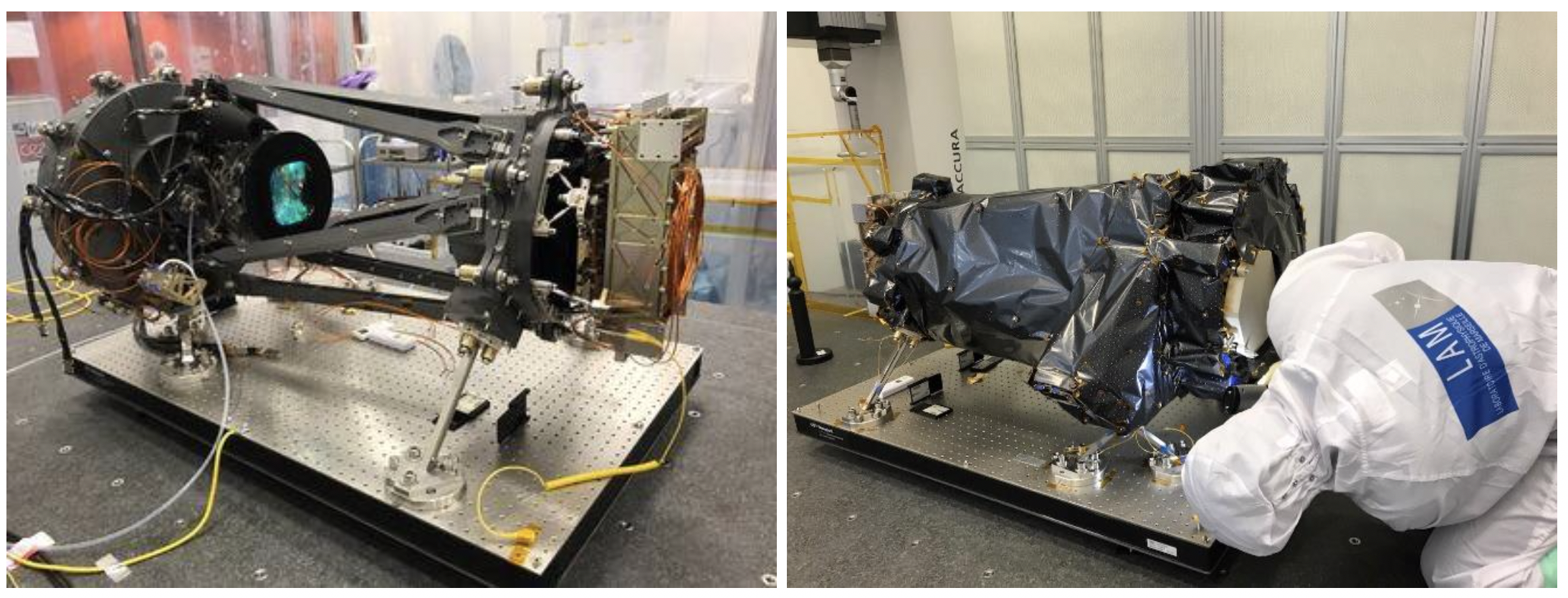
- LSST le 15 mai 2018 a eu lieu l’inauguration du prototype du système de changeur de filtres, l’une des pièces maîtresses de la caméra du télescope LSST. Cette prouesse technique est le fruit d’une collaboration entre cinq laboratoires de l’IN2P3 du CNRS dans ce projet unique dans lequel la France joue un rôle très particulier aux côtés des États-Unis et du Chili.
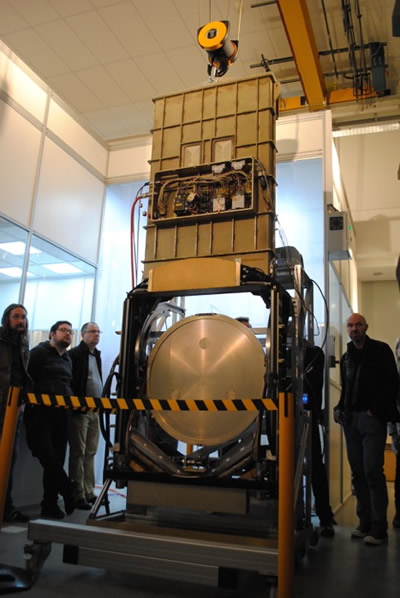
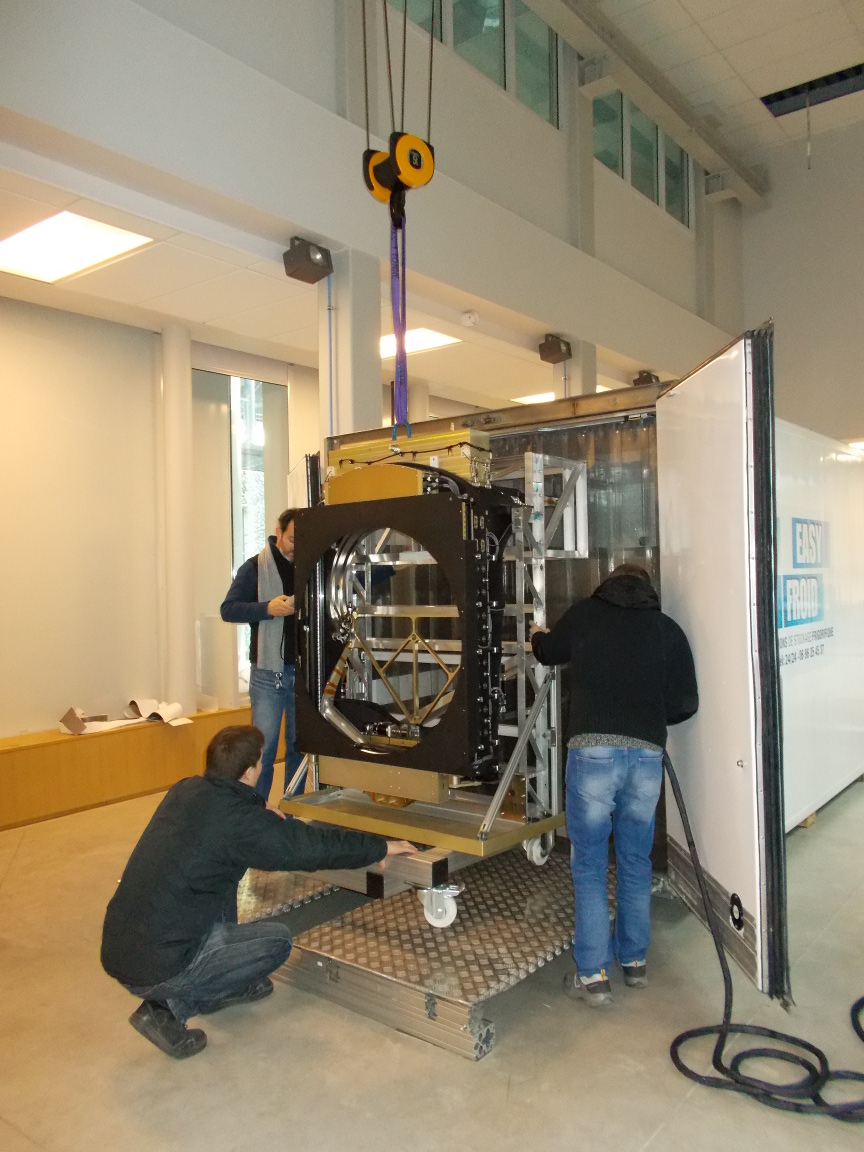
- Euclid : Le CPPM vient de finir la caractérisation des 16 détecteurs de vol du NISP de Euclid. Vingt détecteurs de vol, sélectionnés par la NASA , ont été livrés au CPPM, caractérisés ans les salles propres du CPPM en 2017-2018. Ils seront intégrés sur l’instrument NISP en 2019, au LAM (Laboratoire d’Astrophysique de Marseille), avec lequel le CPPM collabore étroitement.
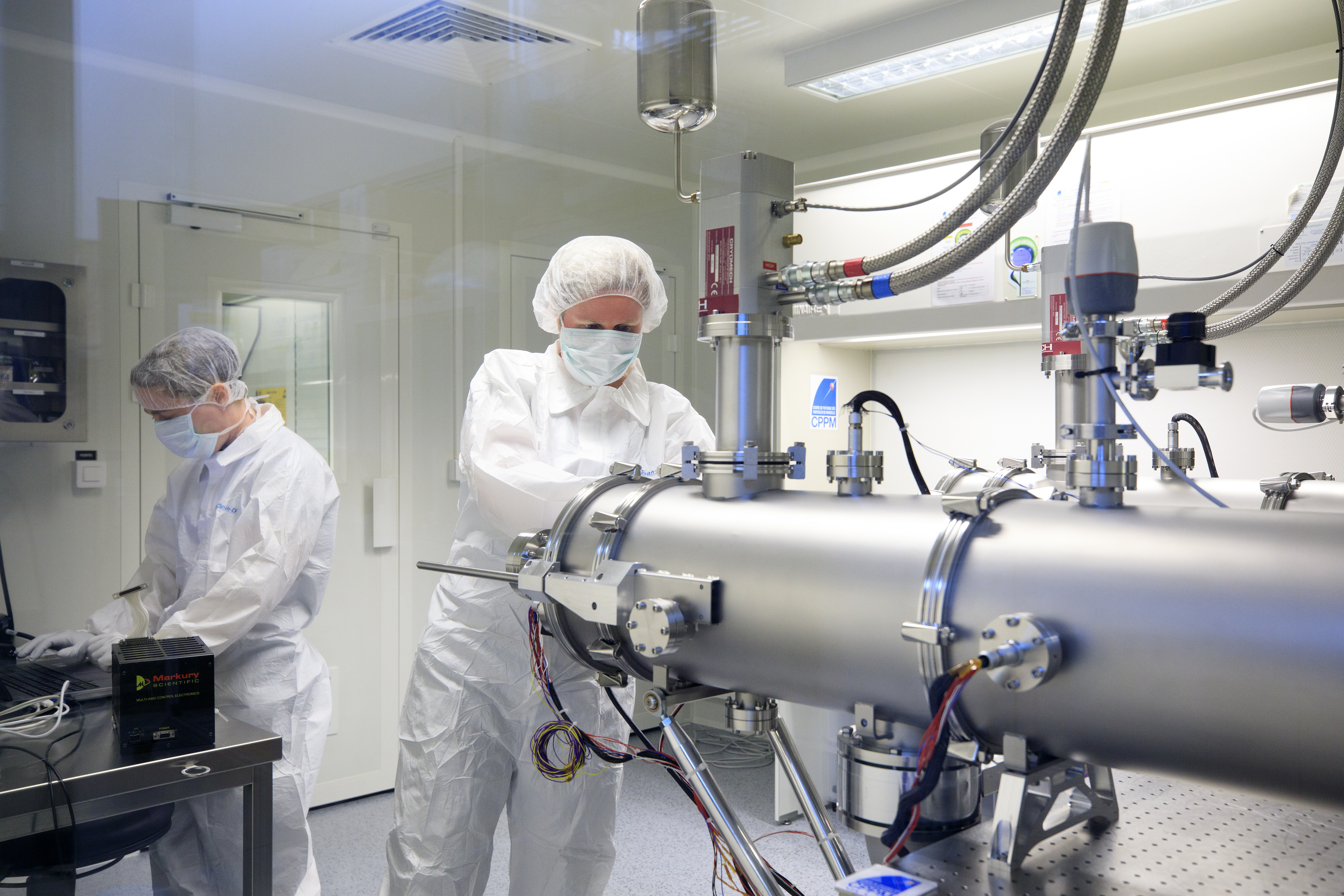
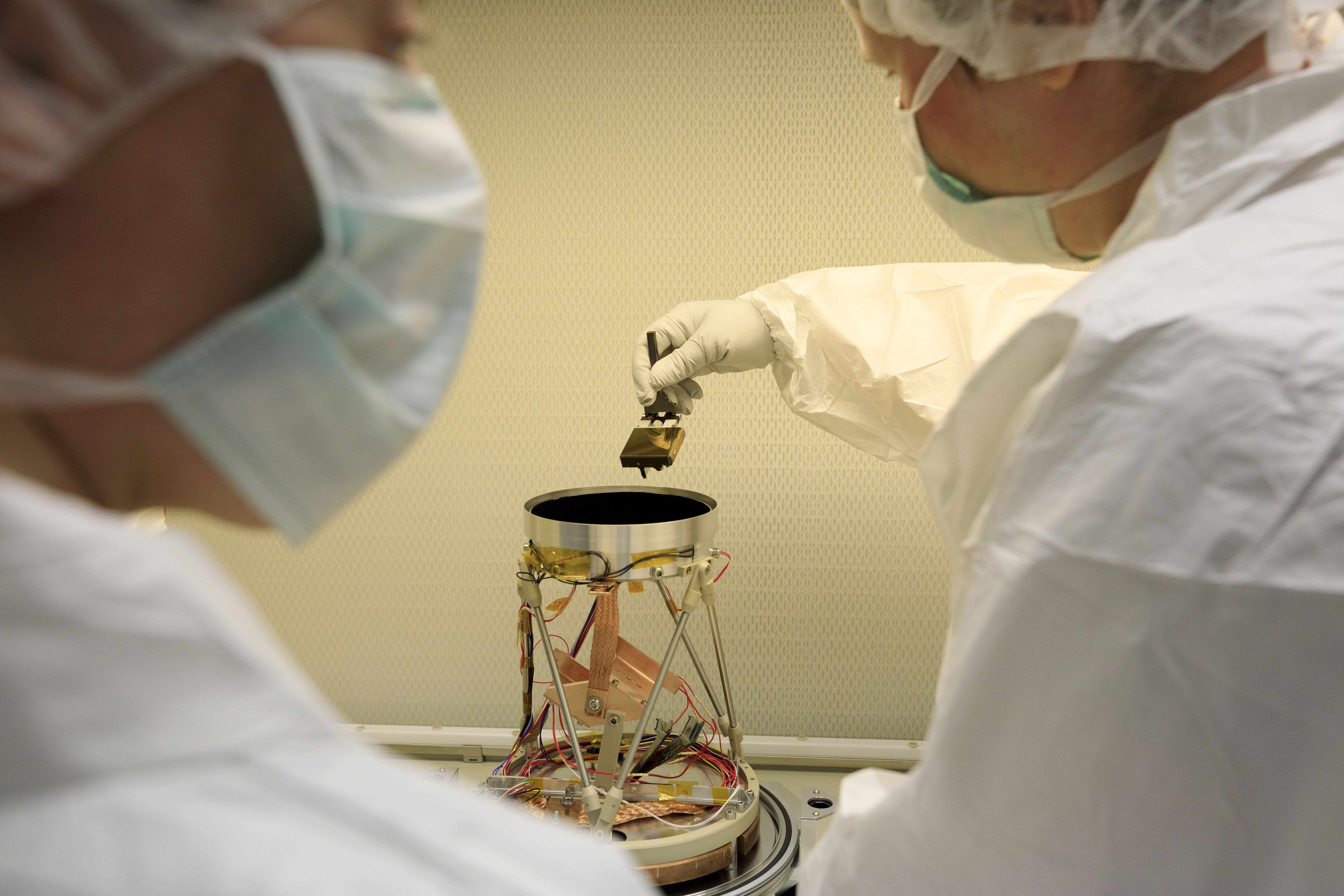
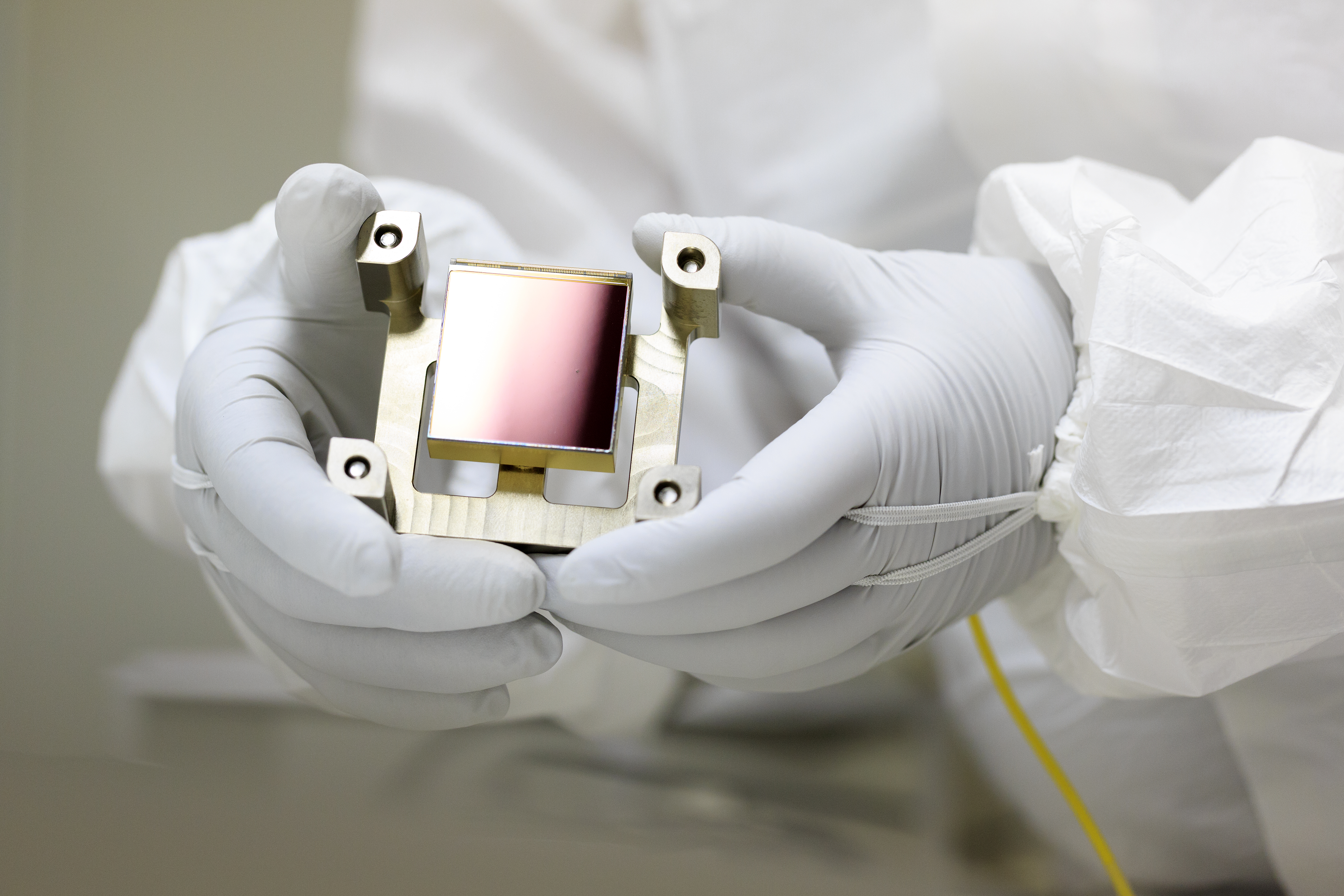
- eBOSS : 11 MILLIARDS D’ANNÉES D’EXPANSION DE L’UNIVERS RÉVÉLÉS !
Le Sloan Digital Sky Survey (SDSS) vient de publier une analyse complète de la plus grande carte tridimensionnelle de l’Univers jamais créée, permettant de reconstruire l’histoire de son expansion sur une période de 11 milliards d’années. Les équipes du CPPM et du LAM du groupe Cosmologie de l'Institut de Physique de l'Univers sont très impliquées dans cette prouesse scientifique et technique.
Le programme « extended Baryonic Oscillation Spectroscopic Survey » (eBOSS) est une collaboration internationale de plus de 100 astrophysiciens qui est l’un des grands programmes d’observation composant le SDSS. Ce lundi 20 juillet, en s’appuyant sur 20 ans d’observations, la collaboration eBOSS a publié une analyse complète de la plus grande carte tridimensionnelle de l'Univers jamais créée. Cette carte permet de reconstruire l’histoire de l'expansion de l'Univers sur une période de 11 milliards d’années, fournissant ainsi un bras de levier jusqu’ici inégalé pour quantifier précisément l’accélération de cette expansion depuis environ 6 milliards d’années. Cette accélération est parfois attribuée à une mystérieuse énergie noire. En outre, la comparaison avec la mesure de l’expansion aux premiers âges de l’Univers grâce aux mesures du satellite Planck, révèle un désaccord d’environ 10% sur l’estimation de la constante de Hubble. Ce résultat ouvre de grands espoirs dans les années à venir quant à une nouvelle physique aux échelles cosmologiques.
La moisson de nouveaux résultats, exposés dans plus d'une vingtaine de papiers, comporte les mesures détaillées de plus de deux millions de galaxies et quasars, ainsi que des milliers de vides cosmiques, donnant naissance à une carte de l’Univers plus précise. Ces nouveaux résultats proviennent d’une collaboration internationale dans laquelle sont impliquées des équipes du CEA, du CNRS et d'AMU. Ce travail a été soutenu par l'Agence National de la Recherche (ANR).
Contacts: Marie Aubert, Marie-Claude Cousinou, Stephanie Escoffier